

 11
11
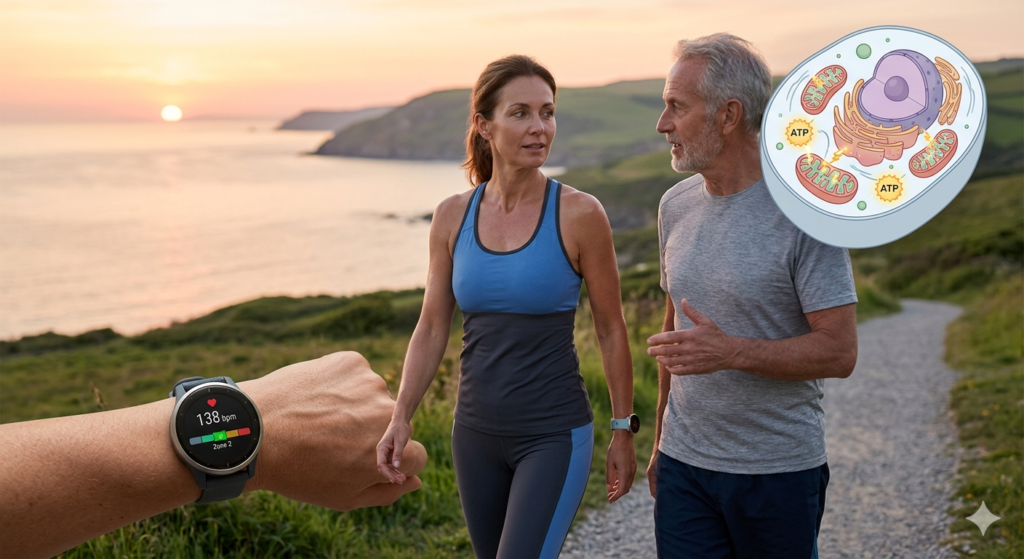
In today’s fitness world, the old “no pain, no gain” mindset is slowly being replaced by something much smarter—Zone 2 Training. While high-intensity workouts like HIIT often grab attention, many elite athletes and longevity experts now spend nearly 80% of their training time moving at a pace that feels surprisingly easy.
At first, this may sound too simple to be effective. However, science shows the opposite.
If your goal is not just to live longer, but also to live healthier, stronger, and with more energy, then understanding Zone 2 Training may be one of the best decisions you make for your long-term health.
After all, true fitness is not only about looking good—it is about increasing your healthspan, which means the number of years you live in good health.
Simply put, Zone 2 Training is a moderate and steady level of exercise where your body works hard enough to improve fitness, but not so hard that you quickly become exhausted.
In this zone, your body mainly uses fat for fuel instead of relying heavily on sugar (glucose). As a result, your metabolism becomes more efficient, and your energy levels remain stable for longer periods.
For example, activities like brisk walking, light jogging, cycling, rowing, or incline treadmill walking are excellent Zone 2 exercises.
The best part? You do not need extreme workouts to get powerful results.
Your mitochondria are often called the “power plants” of your cells because they produce energy for your body.
When you consistently train in Zone 2, your body builds stronger and more efficient mitochondria. Consequently, this improves your energy production and helps protect against age-related diseases such as Type 2 diabetes and metabolic syndrome.
In short, better mitochondria mean a healthier and longer life.
Many people rely too heavily on sugar for energy, which often causes energy crashes and weight gain.
However, Zone 2 Training teaches your body how to switch smoothly between burning fat and carbohydrates. This is called metabolic flexibility.
Because of this, you experience:
Therefore, your body becomes more efficient both during exercise and in everyday life.
Your heart is a muscle, and like any muscle, it becomes stronger with proper training.
Zone 2 workouts improve your heart’s stroke volume, which means your heart pumps more blood with each beat. As a result, your resting heart rate often becomes lower.
This is important because a lower resting heart rate usually means less stress on your cardiovascular system and better long-term heart health.
Simply put, your heart works smarter—not harder.
You do not need expensive lab testing or fancy fitness gadgets to find your Zone 2.
Instead, use these two simple methods:
This is the easiest and most reliable method.
You should be able to hold a full conversation while exercising, but you should sound slightly breathless.
Here’s a quick guide:
This simple test works surprisingly well for most people.
You can also use your heart rate as a rough guide:
Target HR=(220−Age)×0.65 to 0.75
For instance, if you are 30 years old:
(220 – 30) = 190
190 × 0.65 to 0.75 = approximately 124 to 143 beats per minute
Although this is only an estimate, it provides a helpful starting point.
To enjoy real longevity benefits, experts recommend aiming for 150 to 200 minutes of Zone 2 Training per week.
Fortunately, this is easier than it sounds.
You can break it down like this:
For example:
Consistency matters far more than intensity.
That is why slow and steady often wins the race.
In a world obsessed with fast results and intense workouts, Zone 2 Training offers something different—something sustainable.
It teaches us that sometimes slowing down is actually the fastest path to better health.
Moreover, it improves your heart, boosts fat burning, strengthens your cells, and supports a longer, healthier life.
So instead of asking, “How hard should I train?”
Try asking:
“How long can I stay healthy enough to enjoy life?”
Because in the end, longevity is the real goal.
And sometimes, the secret to living longer starts by simply slowing down.