

 11
11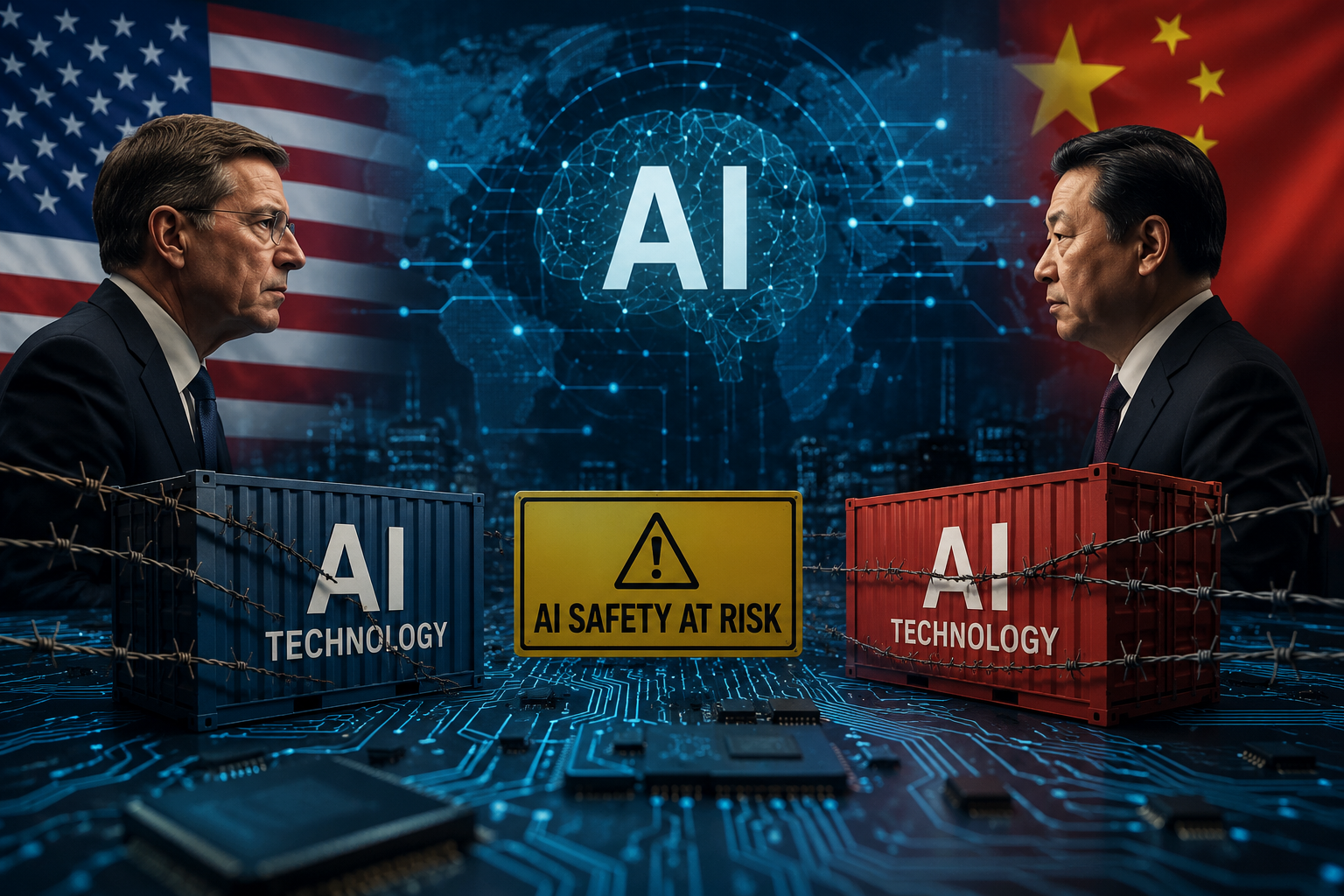
As artificial intelligence becomes smarter, faster, and more capable than ever before, the world’s two biggest technology rivals may be drifting further apart—raising serious questions about the future of AI safety.
What happens when the nations leading the AI revolution stop working together? Experts warn that the consequences could extend far beyond politics, affecting cybersecurity, global stability, and the safe development of next-generation artificial intelligence.
The growing dispute between the United States and China over AI technology is no longer just a competition for innovation. It is rapidly becoming a geopolitical battle that could weaken international efforts to prevent powerful AI systems from being misused.
Washington and Beijing have been competing for leadership in artificial intelligence for years. However, recent allegations involving intellectual property, advanced AI chips, and model development have significantly increased tensions.
US officials are reportedly investigating whether Chinese AI companies improperly benefited from advanced American AI technology while also considering additional restrictions and possible sanctions. At the same time, concerns continue to grow over access to cutting-edge AI chips and open-weight AI models.
These developments are unfolding just weeks before planned AI safety discussions between officials from both countries, creating uncertainty about whether meaningful cooperation can continue.
Artificial intelligence is advancing at an unprecedented pace.
Modern AI systems are capable of writing software, analyzing complex data, assisting scientific research, and automating business operations. While these innovations offer enormous benefits, they also introduce new security challenges.
Experts warn that increasingly capable AI could be exploited for:
Because these risks affect every nation, researchers argue that global cooperation is becoming more important—not less.
One of the biggest disagreements centers on open-weight AI models.
Supporters believe open models encourage innovation, research, and healthy competition by allowing developers worldwide to improve AI technology.
Critics argue that making highly capable AI widely available could allow malicious actors to exploit these systems for cybercrime or other harmful purposes.
This debate has become another major source of tension between the US and China as both governments evaluate how much access should be allowed to frontier AI technologies.
Many AI researchers believe no single country can effectively manage advanced AI risks alone.
Shared standards for safety testing, transparency, security evaluations, and responsible deployment could help reduce the dangers posed by increasingly autonomous AI systems.
However, deteriorating diplomatic relations may make international agreements more difficult to achieve just as AI capabilities continue accelerating.
Despite rising political tensions, officials from the United States and China are still expected to hold AI-focused talks in September, offering a potential opportunity to address shared concerns surrounding frontier AI, cybersecurity, and safety standards. Whether those discussions produce meaningful cooperation remains uncertain.
Artificial intelligence is reshaping industries, economies, and national security faster than almost any previous technology. While competition can fuel innovation, experts caution that a complete breakdown in cooperation between the world’s two AI superpowers could make managing future risks significantly more difficult.
As AI continues evolving, the challenge will be balancing technological leadership with international responsibility—ensuring that the race for AI dominance does not come at the expense of global safety.