
 11
11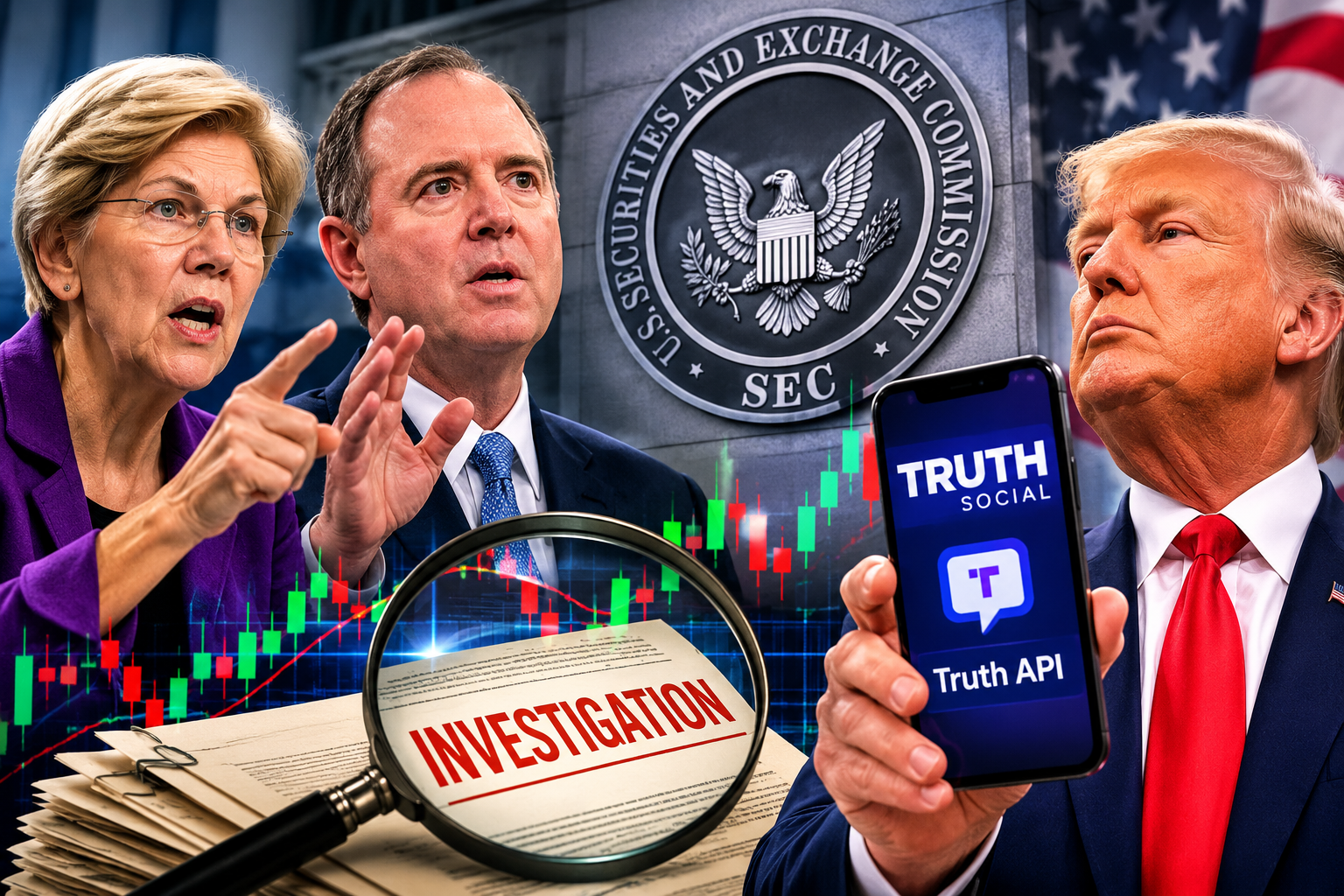
Could paying for early access to a U.S. president’s social media posts create an unfair advantage for Wall Street? That question is now at the center of a growing political and regulatory debate after two prominent Democratic senators called for a federal investigation into Trump Media’s latest business venture.
The controversy erupted after Senators Elizabeth Warren and Adam Schiff formally urged the U.S. Securities and Exchange Commission (SEC) to investigate Trump Media & Technology Group’s newly launched Truth API, a premium data service that provides paying subscribers with faster access to selected Truth Social posts—including those from President Donald Trump.
According to the senators, the new service raises serious questions about market integrity and investor fairness.
In a letter sent to the SEC, Warren and Schiff argued that allowing wealthy investors or financial firms to receive Trump’s social media posts before the general public could create an uneven playing field in financial markets. Since Trump’s posts have previously influenced stock prices and investor sentiment, they warned that early access could provide valuable trading advantages to select customers.
The lawmakers described the arrangement as a potential conflict between presidential communications and private business interests, asking regulators to determine whether federal securities laws or ethics standards may have been violated.
Trump Media recently introduced Truth API, a subscription-based service aimed at professional users, including financial institutions, traders, and data providers.
Reports indicate that the platform can cost up to $100,000 per month, offering faster delivery of posts from influential Truth Social accounts before many users see them through standard channels. Trump Media says the service is designed to distribute public information more efficiently and maintains that it complies with applicable laws.
Presidential statements have often moved financial markets within minutes.
Over the years, investors have closely monitored comments from political leaders because they can influence industries, company valuations, tariffs, regulations, and broader market sentiment. Warren and Schiff argue that monetizing early access to those communications could benefit a small group of investors at the expense of ordinary market participants.
Financial ethics experts quoted in recent reports also note that while premium market data services are common, offering accelerated access to communications from a sitting president presents unique legal and ethical questions.
Trump Media has rejected the allegations, saying the lawmakers are mischaracterizing the product.
The company maintains that Truth API distributes public content and distinguishes between public and non-public information. It also criticized the senators’ request as politically motivated while insisting the service follows existing legal standards.
Meanwhile, the SEC confirmed it received the senators’ letter but has not indicated whether it will open a formal investigation.
If the SEC decides to review the matter, regulators could examine whether the Truth API structure creates unfair market advantages or raises concerns under securities laws governing selective access to market-moving information.
For now, no wrongdoing has been established, and the request from Warren and Schiff represents a call for regulatory review rather than a finding of legal violations. Investors, political observers, and market participants will be watching closely to see whether the SEC takes further action.
The dispute over Trump Media’s Truth API highlights the increasingly complex intersection of politics, technology, and financial markets. As digital platforms continue to influence investment decisions in real time, regulators face growing pressure to determine whether equal access to market-moving information is essential for maintaining investor confidence.
Whether the SEC launches a formal investigation or not, the debate has already sparked broader questions about transparency, ethics, and the future of financial data in the digital age.