
 11
11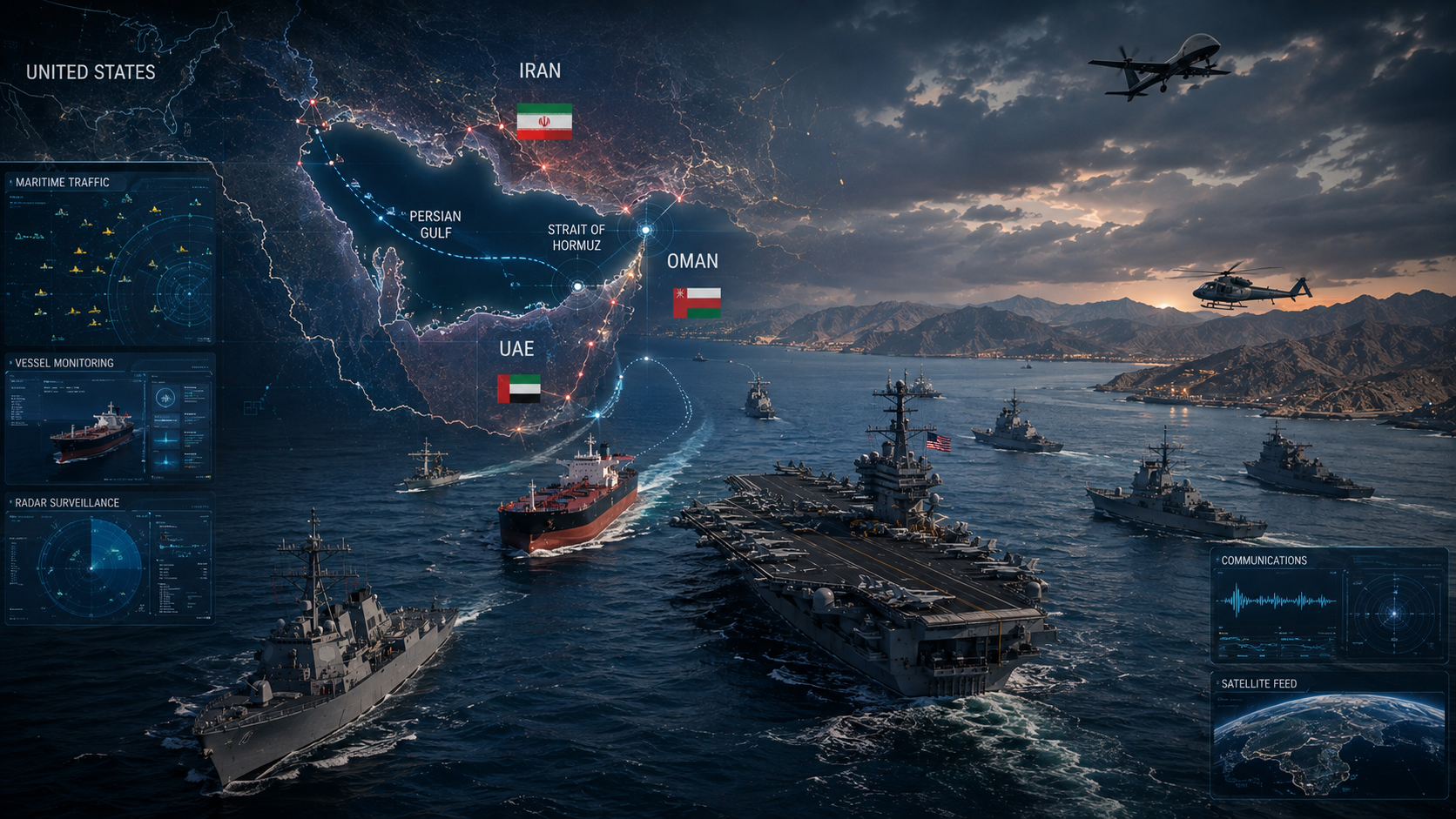
The US military strategy in the Middle East is changing in a way that is difficult to understand if we look only at airstrikes, troops or weapons.
The more revealing story is happening at sea.
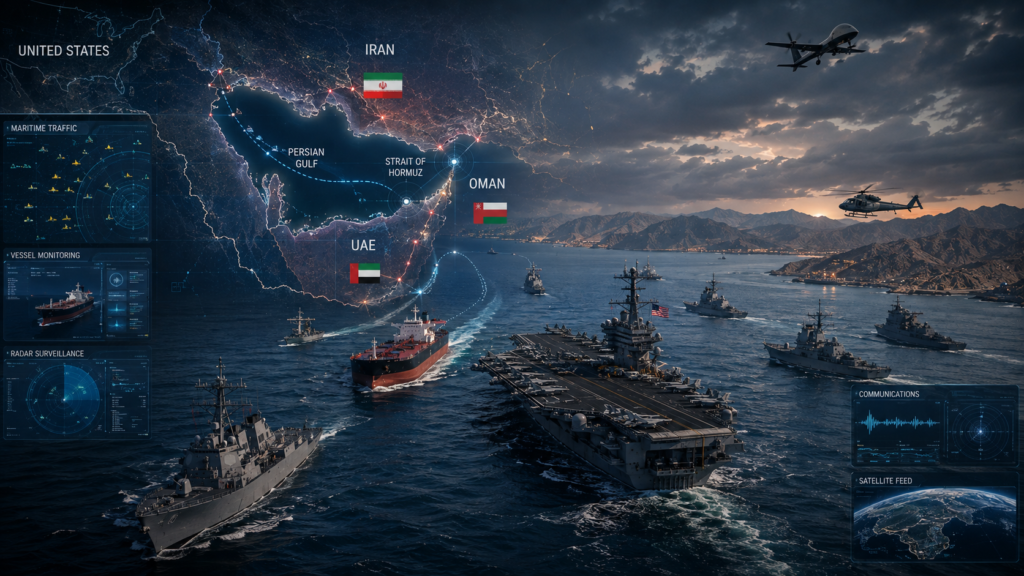
In 2026, the Strait of Hormuz has become one of the clearest examples of how military power, economic pressure, and diplomacy can collide. The United States is trying to protect maritime commerce and maintain pressure on Iran, while Tehran has used the strategic waterway as one of its most powerful sources of leverage. Commercial ships are caught in the middle.
That makes the U.S. Navy more than a military force in this crisis. It is also being used as a tool of economic pressure, deterrence and maritime security.
The challenge, however, is enormous.
The Strait of Hormuz is narrow, crowded and surrounded by Iranian territory and military positions. U.S. forces can patrol it, escort ships and impose blockades, but guaranteeing normal commercial traffic in the middle of an active conflict is far more complicated than simply putting warships in the water.
That tension sits at the heart of America’s current Middle East strategy.
At its broadest level, the US military strategy in the Middle East is designed around several overlapping goals:
The difficult part is that these objectives can sometimes pull Washington in different directions.
A strong military response may deter an opponent, but it can also increase the risk of a wider conflict.
A restrained approach may reduce escalation, but regional partners can interpret restraint as weakness.
And diplomacy may offer a way out, yet military pressure is often being used precisely to strengthen America’s bargaining position.
That is the complicated reality behind the headlines.
Few places illustrate the connection between military power and the global economy better than the Strait of Hormuz.
The narrow waterway connects the Persian Gulf with the Gulf of Oman and the Arabian Sea. It is one of the world’s most important routes for oil, natural gas and other commodities.
Before the current conflict, enormous volumes of energy passed through the strait every day.
That made Hormuz strategically important long before the latest U.S.-Iran confrontation.
Now its importance has increased dramatically.
U.S. maritime authorities have warned that the risk to commercial vessels remains high, citing Iranian threats and attacks involving missiles, drones and other capabilities. The U.S. Maritime Administration has also advised American-flagged vessels operating in the region to maintain distance from U.S. military ships and coordinate closely with naval authorities.
In other words, maritime security has become a front line issue.
Aircraft carriers and destroyers are often the most visible symbols of American military power.
But naval strategy involves much more than putting large warships in the region.
U.S. naval forces can perform several functions simultaneously:
That last point is easy to overlook.
Military deployments are not always intended to lead directly to combat. Sometimes their purpose is to convince the other side that continuing a confrontation will become increasingly expensive.
The problem is that deterrence only works if the opponent believes the threat is credible.
The current confrontation has pushed the U.S. Navy into an especially controversial role.
The United States has reinstated a naval blockade involving Iranian ports, coasts and shipping following the collapse of an earlier ceasefire arrangement. U.S. officials have said the Navy can sustain the blockade for an extended period by rotating ships through the region.
This is not a small policy adjustment.
A blockade is fundamentally different from simply conducting patrols.
It means the United States is attempting to control or restrict maritime activity connected to Iran while simultaneously arguing that non-Iranian commercial shipping should be able to move safely.
That creates a difficult operational problem.
How do you restrict one country’s maritime activity without making the entire waterway more dangerous for everyone else?
There is no easy answer.
From Washington’s perspective, restoring normal shipping through Hormuz might sound like a straightforward military objective.
In practice, it is anything but.
Iran has geography on its side.
The country sits along the northern side of the strait and possesses missiles, drones, small boats and other capabilities that can threaten vessels without requiring a conventional naval battle.
A ship does not need to be sunk for shipping companies to become nervous.
If insurers increase premiums, if crews fear attacks or if companies believe a vessel could be detained, operators may simply decide not to enter the area.
That is already part of the problem.
Recent reporting has shown that traffic through the strait has fallen dramatically compared with normal levels.
This is an important lesson in modern maritime warfare:
You do not necessarily have to close a sea lane physically to disrupt it economically.
Fear can do part of the work.
This is perhaps the biggest challenge facing U.S. strategy.
Washington can argue that it has the military capability to control the surrounding waters.
But commercial shipping companies make decisions based on risk.
A tanker operator does not ask only whether an American aircraft carrier is nearby.
The company also asks:
That is why the reopening of Hormuz cannot be measured solely by the number of U.S. warships operating nearby.
The real test is whether commercial operators believe the route is safe enough to use.
Iran does not need to defeat the U.S. Navy in a traditional naval battle to create problems for Washington.
Its strategy can instead focus on disruption.
Small boats, missiles, drones, mines and coastal positions can create uncertainty around a waterway that is extremely important to the world economy.
This is a classic asymmetric challenge.
The United States has vastly greater conventional military power. But Iran can attempt to impose costs using relatively inexpensive systems and geography.
That imbalance makes the conflict frustrating for the stronger military power.
A sophisticated warship may cost billions.
A relatively inexpensive drone or missile can nevertheless force a shipping company to reconsider a voyage.
The objective is not necessarily to win a traditional naval battle.
It can be enough to make the opponent spend more resources maintaining security than it wants to spend.
It might seem logical that the United States could use overwhelming military force to eliminate the threat.
But that approach carries serious risks.
Iran is not an isolated battlefield.
The region contains U.S. bases, allied governments, commercial ports, energy infrastructure and densely populated cities.
An attack that goes too far could trigger retaliation against American forces or regional partners.
It could also encourage attacks on shipping elsewhere, including the Red Sea.
And then there is the political cost.
The longer a military operation continues, the harder it becomes for Washington to explain what the final objective actually is.
That is why the current strategy has elements of pressure and restraint at the same time.
The United States wants Iran to feel the consequences of continued confrontation.
But it also has reasons to avoid turning the conflict into an open-ended regional war.
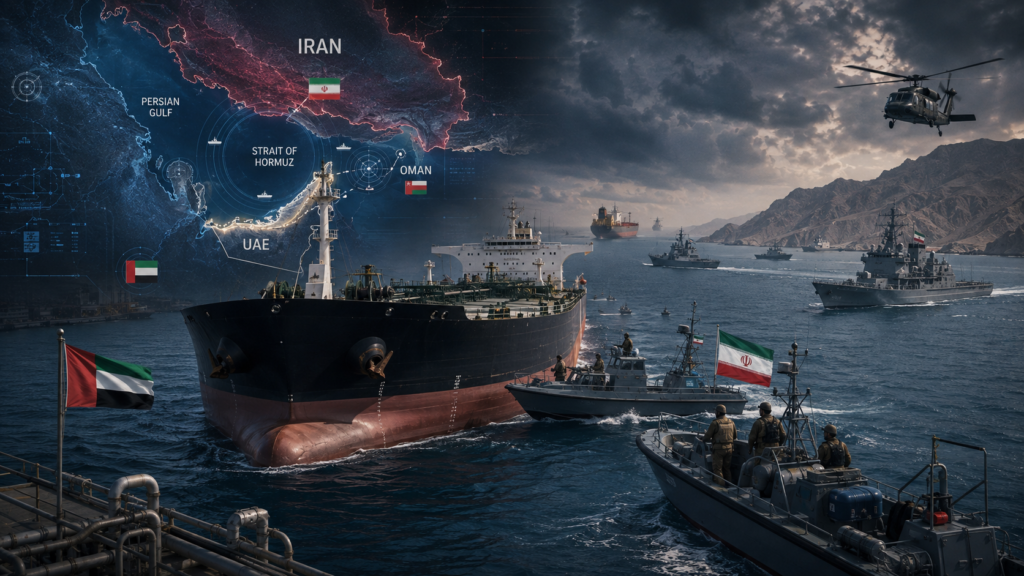
Iran Seizes UAE Tanker in Strait of Hormuz
The United States does not operate in the Middle East alone.
Saudi Arabia, the UAE, Oman, Qatar, Bahrain and other regional states all have different interests.
Some depend heavily on U.S. security guarantees.
Others want to avoid becoming battlefields.
Oman is particularly important because of its geography and diplomatic relationship with Iran.
The country has historically maintained communication channels that other governments have struggled to preserve.
That makes Oman’s role especially sensitive during a confrontation centered around Hormuz.
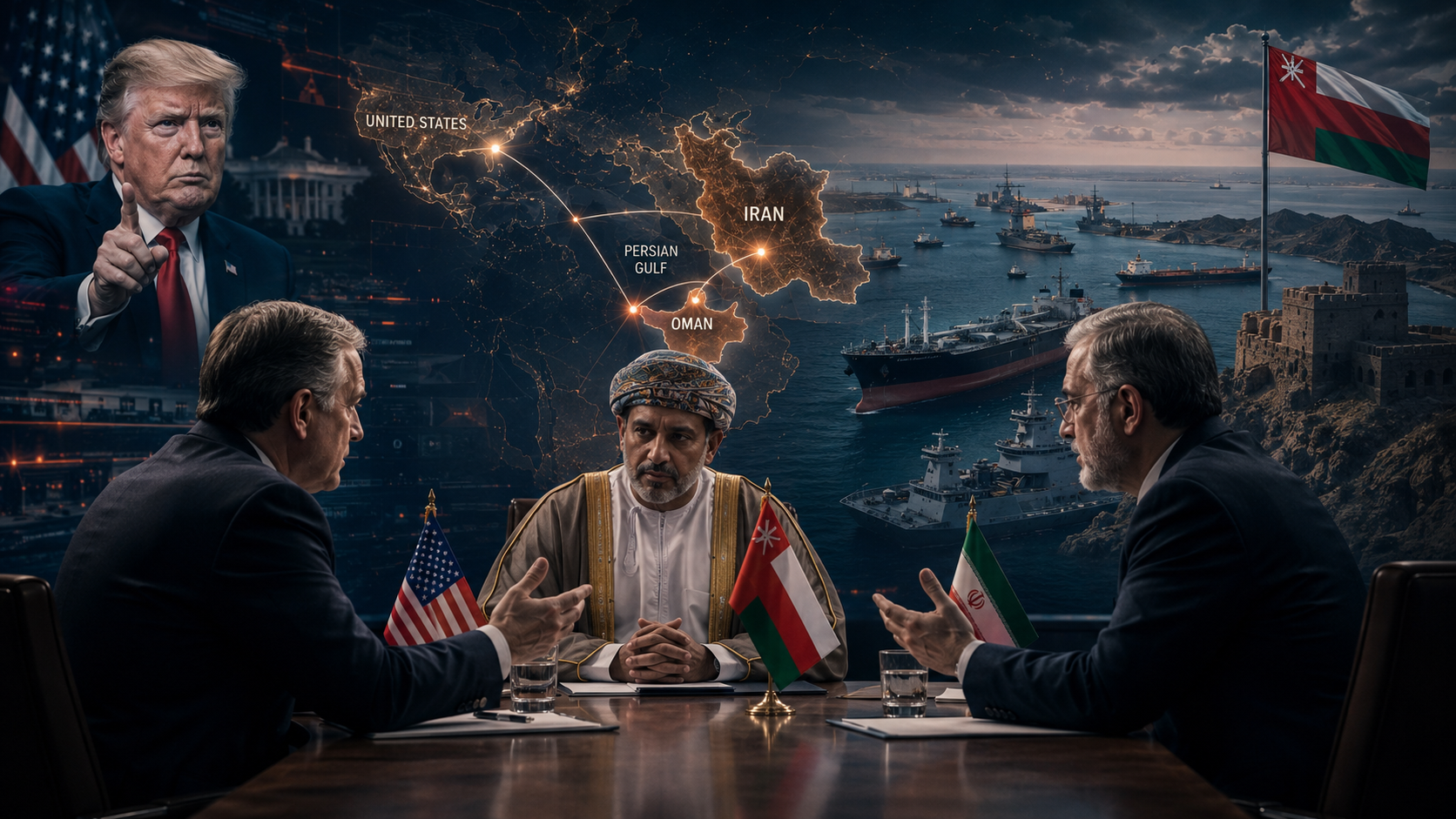
Recent tensions have even produced a remarkable diplomatic dispute between Washington, Muscat and Tehran, with Trump publicly criticizing Oman’s handling of maritime arrangements involving Iran.
The episode demonstrates how difficult U.S. strategy becomes when regional partners do not always share Washington’s preferred approach.
The UAE has strong economic reasons to keep maritime trade moving.
Recent attacks involving UAE-linked commercial vessels have highlighted how exposed Gulf shipping can become during a wider conflict. The UAE has accused Iran of attacks on vessels operated by its state-owned energy company ADNOC, while Tehran has disputed aspects of the accusations.
For Washington, protecting Gulf partners is therefore not just about military alliances.
It is also about maintaining confidence in the regional economic system.
If tankers stop sailing, insurance costs rise and energy exports become harder to move, the consequences extend far beyond the battlefield.
That is where military strategy meets economic strategy.
The U.S. military’s Middle East presence is not built around naval forces alone.
American air power provides another layer of capability.
Fighter aircraft, bombers, surveillance aircraft and drones can strike targets, gather intelligence and support naval operations.
Air power is especially useful for targeting fixed military infrastructure.
But controlling a maritime chokepoint is different.
A strike can destroy a missile launcher.
It cannot automatically convince thousands of commercial ships that the waterway is safe.
That requires persistent surveillance, patrols, communication, escorts, mine-clearing capabilities and — perhaps most importantly — a political arrangement that reduces the likelihood of renewed attacks.
One reason U.S. policymakers have historically preferred naval and air power in the region is the painful legacy of large-scale ground wars.
The wars in Iraq and Afghanistan demonstrated the enormous costs associated with long-term military occupations.
That history shapes current American thinking.
Washington can deploy significant forces without necessarily preparing for an invasion or occupation.
This allows the United States to maintain pressure while trying to avoid the most dangerous form of military commitment.
But there is a limit.
If protecting maritime traffic eventually requires American forces to operate deep inside contested territory, the distinction between limited military pressure and a much larger war can become increasingly difficult to maintain.
It would be a mistake to view military strategy and diplomacy as separate tracks.
They are closely connected.
A naval deployment can strengthen a negotiator’s position.
A blockade can create economic pressure.
A diplomatic agreement can reduce the need for military forces.
And a breakdown in negotiations can send ships and aircraft back into a more active role.
This is why the current U.S.-Iran confrontation cannot be understood purely through battlefield maps.
The real contest is also about bargaining power.
Washington wants Tehran to accept terms that protect U.S. and allied interests.
Iran wants to preserve enough leverage to avoid being forced into an agreement on American terms.
The Strait of Hormuz has become one of the most valuable bargaining chips on both sides.
There is another reason maritime security matters so much to Washington: energy markets.
Any prolonged disruption in Hormuz can affect oil and gas prices around the world.
The effects do not stop at the Gulf.
Higher energy prices can feed into transportation costs, manufacturing expenses, food prices and inflation.
That creates a second strategic problem for the United States.
A military operation intended to protect global energy supplies can itself contribute to higher energy prices if the conflict becomes prolonged.
Recent market reactions have already shown how sensitive oil prices are to developments around Hormuz.
This is why Washington’s strategy has an economic dimension that is just as important as the military one.
The current U.S. approach can broadly be understood as a combination of:
| Strategic Tool | Main Purpose |
|---|---|
| Naval forces | Protect maritime interests and impose pressure |
| Air power | Strike threats and maintain regional reach |
| Blockade | Restrict Iranian maritime activity |
| Sanctions | Increase economic pressure |
| Regional alliances | Share security responsibilities |
| Diplomacy | Seek a political solution |
| Maritime coordination | Protect commercial shipping |
None of these tools works perfectly on its own.
The strength of American strategy comes from combining them.
The weakness is that every additional layer of pressure can also create another opportunity for escalation.
That is the central dilemma.
There is also a practical problem that is sometimes missing from political speeches: ships and sailors are not unlimited resources.
The U.S. Navy has global commitments.
A prolonged Middle East deployment means ships, aircraft and crews remain away from their normal bases for extended periods.
Recent reporting has highlighted concerns surrounding the prolonged deployment of the USS Abraham Lincoln in the region, while another carrier, the USS George Washington, has been moving toward the Middle East to help with the wider deployment burden.
This illustrates a broader challenge for American military planning.
The United States wants to maintain a strong presence in Europe and the Middle East while also managing growing strategic competition elsewhere, particularly in the Indo-Pacific.
Every carrier deployed to one crisis is a carrier that is not immediately available somewhere else.
The future of the US military strategy in the Middle East will depend heavily on whether Washington and Tehran can eventually reach a political arrangement.
If diplomacy succeeds, the United States could reduce the intensity of its maritime operations.
If negotiations fail, the naval blockade and pressure campaign could continue.
But neither outcome completely solves the underlying strategic problem.
Iran will remain geographically positioned beside the Strait of Hormuz.
The United States will continue to have an interest in protecting commercial navigation.
And Gulf states will continue balancing their security relationships with Washington against their desire to avoid becoming targets in another regional war.
That means the strategic competition is unlikely to disappear simply because one ceasefire or agreement is reached.
Several developments will reveal whether U.S. strategy is working.
The most important indicator may be whether normal maritime traffic begins returning to Hormuz.
A reduction in attacks, threats or interference with commercial vessels would suggest that pressure is having an effect.
The size and duration of American naval deployments will reveal how seriously Washington expects the confrontation to continue.
If regional partners become more coordinated with the United States, Washington’s ability to maintain maritime security could strengthen.
Ultimately, the most sustainable solution is unlikely to come from warships alone.
A political agreement that makes commercial shipping predictable would achieve something military power cannot accomplish by itself.
The strategy combines protection of U.S. forces and allies, deterrence, maritime security, economic pressure and efforts to prevent regional conflicts from threatening broader American interests.
The Navy provides a persistent military presence capable of protecting shipping, monitoring maritime threats, supporting air operations and responding quickly to attacks.
Hormuz is a major global energy chokepoint. Disruption there can affect oil and gas supplies, shipping costs and inflation around the world.
Washington has sought to protect freedom of navigation and commercial shipping while imposing maritime pressure on Iran. The exact meaning of “control” remains politically contested, particularly as Iran continues to assert its own authority over passage.
A blockade can restrict an adversary’s maritime trade and create economic pressure without requiring a large-scale ground invasion. The current U.S. blockade of Iranian ports is part of Washington’s wider pressure strategy.
Not completely. U.S. naval forces can provide surveillance, warnings and protection, but commercial confidence also depends on the overall security environment, insurance costs and the willingness of shipping companies to accept the risk.
Oman’s location beside the Strait of Hormuz and its historical communication channels with Iran give it an unusually important diplomatic and strategic position.
There is always an escalation risk when military forces operate in a densely contested region. That is why the balance between military pressure and diplomacy remains central to Washington’s approach.
The US military strategy in the Middle East is no longer simply about maintaining bases or responding to attacks.
The current confrontation shows something more complicated.
American military power is being used to protect shipping, pressure Iran, reassure Gulf partners and preserve access to one of the world’s most important waterways. The U.S. Navy sits at the center of that effort because maritime security has become inseparable from energy security and economic stability.
But there is a limit to what military power can achieve.
Warships can patrol a sea lane. Aircraft can strike a threat. A blockade can increase economic pressure.
None of them can permanently replace diplomacy.
That is the uncomfortable reality behind the current struggle over the Strait of Hormuz.
Washington may possess greater conventional military power, but Iran’s geography gives Tehran significant opportunities to make the region costly and unpredictable. Meanwhile, America’s Gulf partners want security without necessarily wanting a wider war on their doorstep.
The most successful U.S. strategy, therefore, may ultimately be the one that uses military strength to create enough leverage for diplomacy — rather than allowing military pressure to become an objective in itself.
For now, the Strait of Hormuz remains the clearest test.
If commercial ships eventually return in large numbers, Washington can argue that its maritime strategy restored confidence.
If traffic remains disrupted despite the presence of American naval forces, the crisis will demonstrate something very different: military superiority does not automatically translate into control of a complicated geopolitical environment.
And that may be the most important lesson of America’s current Middle East strategy.