
 11
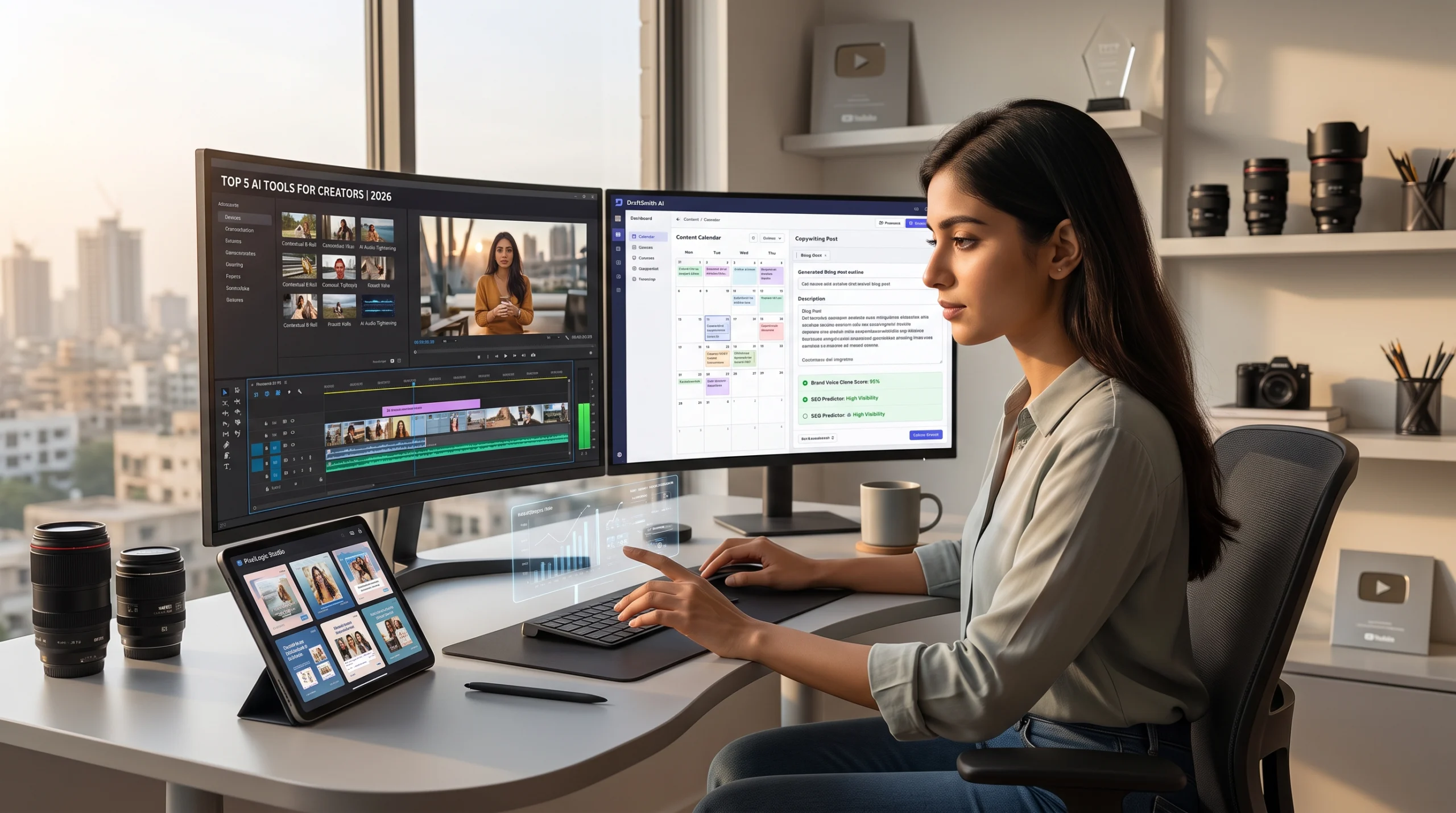
The creator economy has shifted from a chaotic, experimental gold rush to a highly structured and aggressively competitive industry. By 2026, building and sustaining an audience requires far more than a smartphone and a ring light; it demands high-volume, premium output deployed consistently across multiple platforms.
Solo creators and small teams are now operating as full-scale media companies, and the defining factor between burnout and sustainable growth is the intelligent application of artificial intelligence.
We are well past the era of clunky text generators and disjointed image rendering. The current software stack offers seamless, professional-grade automation that handles the heavy lifting of digital production. For tech enthusiasts, marketers, and digital entrepreneurs looking to scale their operations, adopting the right technological infrastructure is no longer optional—it is a baseline requirement. Here are the top five AI tools altering how we approach video editing, copywriting, and design this year.
Before examining specific applications, it is crucial to understand the current trajectory of creative software. The tools dominating the market in 2026 focus on hyper-personalization, stringent brand consistency, and deep workflow integration. Rather than operating in isolated software silos, these modern applications communicate with your existing databases, learn your specific aesthetic preferences, and automate the most tedious, repetitive tasks in your pipeline.
This transition allows digital creators to spend ninety percent of their time on high-level strategy, community building, and original ideation, leaving the mechanical execution to the algorithms. The result is a massive reduction in overhead costs and a significant increase in publishing frequency without sacrificing quality.
Video editing has traditionally been the most severe bottleneck for digital creators, often requiring hours of meticulous labor for a single output. FrameMind Pro addresses this challenge by functioning as an automated, cloud-based post-production facility. Instead of manually splicing clips, adjusting audio levels, and searching for supplementary footage, editors can feed raw files into the system and let the software render a highly polished initial cut. The platform understands narrative pacing and visual storytelling, making intelligent, context-aware decisions about when to cut to a secondary camera angle or insert graphical overlays.
Writing high-converting copy for newsletters, social threads, and video scripts requires constantly adapting to shifting algorithms and audience expectations. DraftSmith AI moves beyond generic text generation by ingesting your past successful content and building a custom, highly specific linguistic model. It writes exactly like you do, matching your cadence, specific vocabulary, and structural preferences while simultaneously optimizing the text for maximum search engine visibility.
Graphic design demands absolute consistency. PixelLogic Studio allows creators to maintain a strict visual identity without needing to keep a dedicated art director on retainer. Whether you are generating YouTube thumbnails, podcast cover art, or website assets, this platform utilizes a centralized, cloud-based asset library to ensure every single output aligns perfectly with your exact color palettes, typography guidelines, and spacing rules.
With content platforms heavily prioritizing short, engaging vertical video, publishing volume is highly critical. ClipRapid is engineered specifically for the rapid deployment of TikToks, Reels, and Shorts. It utilizes massive datasets of viewer retention metrics from thousands of viral videos to understand exactly what keeps viewers watching, applying those specific psychological principles directly to your raw uploads.
Producing high-quality content is only half the battle; the other half is high-level strategy and planning. NarrativeOS acts as an automated managing editor for digital entrepreneurs. It continuously researches your specific niche, identifies glaring content gaps in the market, and builds comprehensive, months-long editorial calendars. For tech writers, educators, and video essayists, this tool is vital for structuring long-term projects and maintaining a consistent publishing schedule without succumbing to creative fatigue.
To extract the highest possible return on investment from these applications, creators must focus heavily on interoperability. The true value emerges when these tools form a connected ecosystem. Using NarrativeOS to outline a concept, feeding that outline into DraftSmith AI to generate a polished script, running the raw recording through FrameMind Pro, and capping it off with an optimized thumbnail from PixelLogic Studio creates a highly streamlined assembly line.
The objective here is not to replace human creativity, personality, or unique perspective. Instead, the goal is to remove the massive amount of technical friction that traditionally slows production down. By centralizing operations and relying on machine learning for the tedious, repetitive aspects of media production, independent creators can successfully maintain publishing schedules that previously required a dedicated staff of ten people.
The creator economy in 2026 heavily rewards operational efficiency, unwavering consistency, and premium production value. The software platforms discussed here—FrameMind Pro, DraftSmith AI, PixelLogic Studio, ClipRapid, and NarrativeOS—represent the absolute leading edge of digital media creation. They empower tech enthusiasts, educators, and digital creators to execute highly ambitious projects, scale their business operations efficiently, and maintain a sharp competitive edge in an increasingly crowded market. By integrating these automated systems securely into your daily workflow, you effectively free up the most valuable and finite resource you possess: the time and mental energy required to think creatively and build your media enterprise.