
 11
11
The internet has changed the way people learn, work, and make money. In 2026, you no longer need to depend entirely on a traditional degree, a physical office, or a single career path to build a better future. With the right online skill, you can work remotely, start freelancing, build a digital business, or make yourself more valuable in an increasingly competitive job market.
But there is a problem. Thousands of courses promise easy money, six-figure incomes, and overnight success. Beginners often jump from one skill to another, spend months watching tutorials, and still have nothing valuable enough to sell. That is why choosing what to learn matters more than simply learning something.
This guide focuses on the best online skills to learn in 2026 based on practical demand, career flexibility, business applications, and long-term usefulness. More importantly, it explains which problem each skill solves, who should learn it, and how you can turn learning into a real-world opportunity.
The biggest career mistake today is assuming that your current skill set will remain valuable forever. Technology is moving rapidly. Artificial intelligence is changing workflows, businesses are automating repetitive tasks, and companies increasingly need people who can combine technical knowledge with creativity, communication, and problem-solving ability. However, AI does not make human skills worthless. Quite the opposite. It creates a new advantage for people who know how to use technology instead of competing against it.
For example, someone who understands SEO can use AI to research content faster. A designer can use AI-assisted tools to accelerate creative work. A marketer can analyze campaigns more efficiently. Therefore, the smartest approach in 2026 is not simply: “Learn AI.” Instead, think: “Learn a valuable skill and learn how AI can make me better at it.” That distinction can dramatically change your results.
AI is arguably one of the most consequential skill areas of 2026. But beginners often misunderstand what this means. You do not necessarily need to become an AI engineer. There is a growing opportunity for people who understand how to use AI tools to solve business problems.
Businesses waste enormous amounts of time performing repetitive tasks. Someone who can identify those repetitive processes and build an efficient AI-assisted workflow can potentially save a company hours every week. That is the real value of AI. Don’t learn AI merely because it is trendy. Learn it because you can connect it to a specific business problem.
If you enjoy writing, research, websites, or digital marketing, SEO remains one of the most useful online skills to develop. Every business wants visibility. The challenge is that publishing content does not automatically bring visitors.
SEO helps businesses understand:
SEO is becoming more sophisticated. Simply inserting a keyword repeatedly into an article is no longer a sustainable strategy. Modern SEO requires search intent, topical depth, useful content, strong information architecture, technical optimization, and genuine expertise.
If you learn those areas properly, SEO can become useful for:
The problem SEO solves is simple: it helps businesses get discovered by people who are already looking for something they offer.
Businesses generate enormous amounts of data. But raw data is not useful if nobody can understand it. That creates a valuable opportunity for people who can turn messy information into clear decisions.
You can start with:
Imagine a business owner has thousands of sales records but doesn’t know:
A data analyst helps answer those questions. In other words, you are not selling spreadsheets. You are selling clarity.
As more businesses move online, digital security becomes increasingly important. Companies need professionals who understand how to identify vulnerabilities, protect systems, monitor threats, and improve security practices.
Beginners can explore:
Cybersecurity requires serious learning and practical training, but it can provide a durable technical career path. The key is to build genuine knowledge rather than collecting certificates without practical ability.
Web development remains a powerful online skill because businesses still need websites, web applications, online stores, dashboards, and digital platforms.
You can begin with:
You do not need to learn everything at once. A smarter strategy is to choose a direction. For example:
Beginner → HTML/CSS → JavaScript → Front-end development → Real projects. Once you become comfortable, you can expand into full-stack development.
Businesses need functional digital experiences. If you can build something that works, loads efficiently, looks professional, and solves a real user problem, your skill becomes commercially useful.
A beautiful website is not automatically a good website. Users need to understand where to click, what to do, and how to complete an action without confusion. That is where UX/UI design becomes important. UX focuses on the user’s experience. UI focuses more heavily on the interface and visual presentation.
You can learn:
Don’t ask: “Does this design look good?”
Ask: “Does this design make the user’s problem easier?” That mindset separates decoration from professional design.
Digital marketing remains one of the most versatile online skills because almost every online business needs customers.
You can specialize in:
The mistake is trying to master everything simultaneously. Instead, choose one core area and become exceptionally good at it. For example: Facebook Ads + conversion strategy + analytics is much more marketable than saying: “I do all kinds of digital marketing.”
Good copywriting is not simply “writing nicely.” It is the ability to understand a person’s problem and communicate a solution persuasively. Copywriters create:
A strong piece of copy usually answers: What is the problem? Why does it matter? What happens if nothing changes? What solution is available? Why should the reader trust it? That’s why persuasive communication remains valuable even when AI can generate text. AI can produce words. A skilled copywriter understands people.
Short-form video continues to dominate many digital platforms. Businesses, creators, educators, influencers, and brands all need video content.
You can learn:
However, don’t focus only on transitions and effects. Storytelling is the real skill. A simple video with a powerful hook can outperform an expensive-looking video that fails to hold attention.
Graphic design remains useful for businesses that need visual communication.
You can work on:
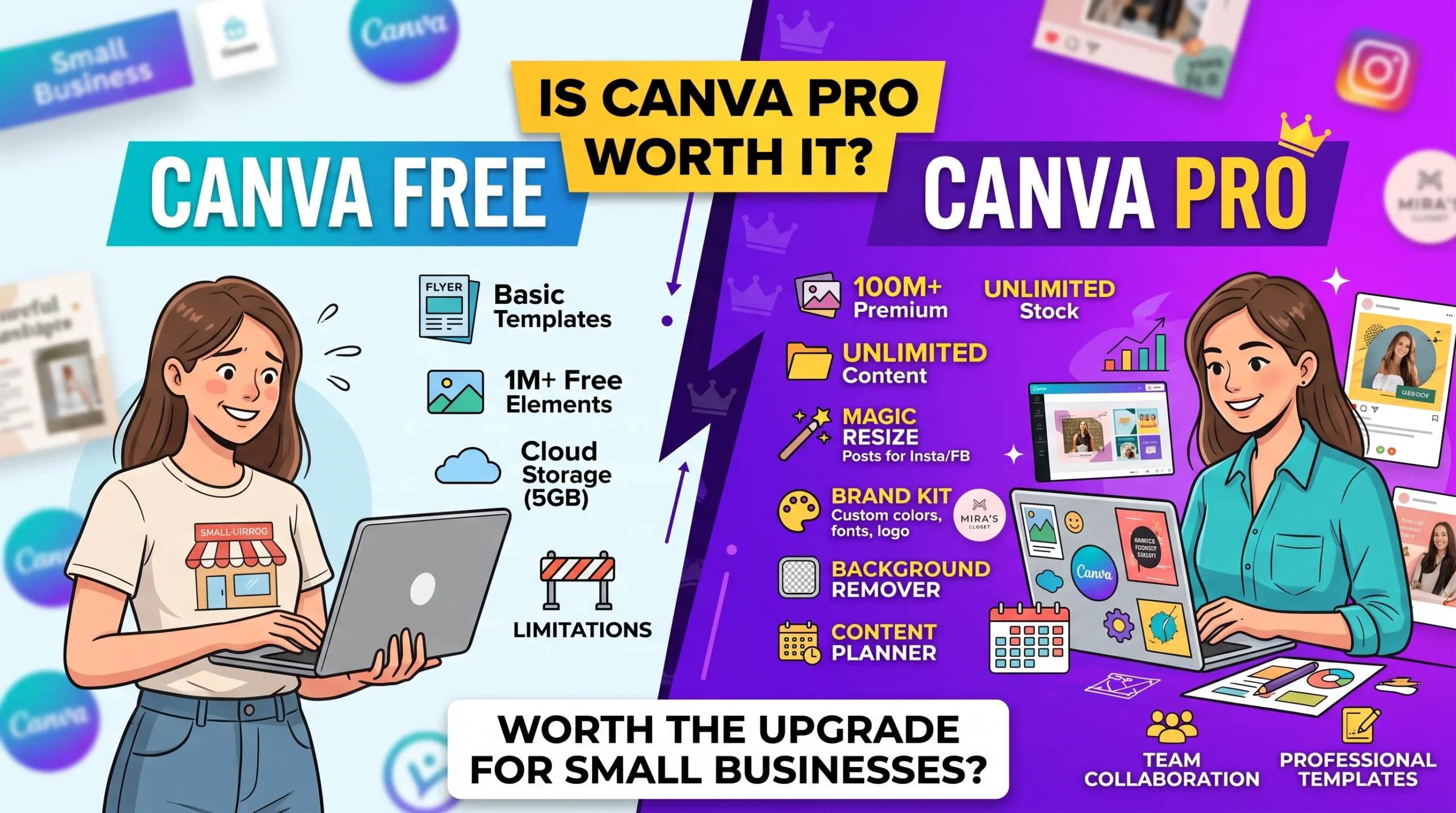
Tools such as Canva make design more accessible, but accessibility also means competition is higher. Therefore, learn design principles, not just software. Typography, hierarchy, composition, spacing, color theory, and visual storytelling will remain useful regardless of which tool becomes popular next.
E-commerce creates opportunities beyond simply owning an online store. Businesses need people who understand:
A strong e-commerce professional understands the entire customer journey: Discovery → Product page → Trust → Purchase → Delivery → Retention If you can identify where customers are dropping out and fix that stage, you are solving a valuable business problem.
Cloud technology powers a huge portion of modern digital infrastructure. People interested in technical careers can explore:
Cloud computing has a steeper learning curve than some of the skills on this list. Nevertheless, for someone willing to invest serious time into technical learning, it can become a formidable long-term career direction.
Many businesses know they should maintain a social media presence but don’t have the time or expertise to manage it consistently.
A social media manager may handle:
But remember: posting every day is not the objective. The objective is to achieve a business outcome.
That might mean:
This shift from “posting content” to building a measurable strategy can make your service considerably more valuable.
Email marketing is sometimes overlooked because social media gets more attention. Yet email remains a powerful communication channel for businesses.
You can learn:
The most important lesson? Don’t treat email as a megaphone. Treat it as a relationship. People don’t want endless promotional messages. They want useful information, relevant offers, and communication that respects their attention.
If you are confident communicating with people, sales can be one of the most practical online skills to learn. Businesses constantly need customers.
You can learn:
Sales is particularly interesting because it teaches a skill that transfers across industries. Whether you eventually sell software, marketing services, consulting, or physical products, understanding why people buy is enormously useful.
This is where many beginners get stuck. They read a list like this and immediately think, “Should I learn AI, SEO, coding, design, marketing, or data?” Don’t choose based only on the highest income claim. Choose based on the intersection of interest + ability + market demand + learning difficulty + earning opportunity.
Choose SEO, copywriting, content strategy, or email marketing.
Consider AI automation, web development, cybersecurity, cloud computing, or data analysis.
Explore UX/UI design, graphic design, or video editing.
Consider digital marketing, sales, lead generation, or social media management.
Combine SEO + content + AI + digital marketing or e-commerce + paid advertising + conversion optimization.
The most common mistake isn’t choosing the “wrong” skill. It is learning without building. You can watch 100 hours of tutorials and still have nothing to show a client. Instead, use the Learn → Build → Test → Improve → Sell approach.
Spend enough time understanding the basics.
Create a website, campaign, dashboard, design, video, automation, or portfolio project.
Look for weaknesses.
Use feedback and real-world results.
Don’t simply say:
“I know SEO.”
Say:
“I can help your website attract more qualified organic traffic by improving its content structure, search intent alignment, and on-page SEO.”
That is a much stronger proposition.
You don’t need to buy an expensive course on day one. Start with free or affordable resources and validate whether you genuinely enjoy the skill. A practical learning system could look like this:
Month 1: Fundamentals
Month 2: Guided projects
Month 3: Independent projects
Month 4: Portfolio development
Month 5: Outreach and freelancing
Month 6: Specialization and improvement
The exact timeline will vary, but the principle is important:
Don’t spend six months preparing to start. Start building while you learn.
AI has created a new reality for online workers. Some repetitive tasks are becoming automated. Therefore, skills based purely on repetitive execution may become less competitive. But skills involving judgment, strategy, creativity, communication, analysis, and problem-solving can become even more valuable when combined with AI.
For example:
SEO + AI
can improve research and content workflows.
Design + AI
can accelerate ideation.
Programming + AI
can increase development speed.
Marketing + AI
can improve research and campaign analysis.
Data analysis + AI
can make information processing faster.
The winning formula isn’t human vs. AI.
It is:
Human expertise + AI leverage.
You don’t necessarily need ten separate skills. Instead, build a skill stack.
For example:
SEO + Content Writing + Analytics + AI
copy writing + Paid Ads + Analytics + Conversion Optimization
Shopify/WooCommerce + Product Research + SEO + Paid Ads
AI Tools + No-Code Automation + Business Analysis + Workflow Design
Video Editing + Copywriting + Social Media + AI
This approach creates something powerful: You become difficult to replace because you solve a broader problem.
Learning is only the first half of the journey. Eventually, you need to connect your skill to a market.
You can explore:
However, don’t obsess over platforms before developing competence. Your first goal should be:
Become useful.
Then:
Become visible.
Then:
Become trusted.
Finally:
Monetize the trust.
Be cautious about skills marketed around instant income.
Red flags include:
Real skills usually require practice. Moreover, markets change. A tool that is popular today may disappear tomorrow. A durable skill, however, can survive changes in technology. So instead of learning one particular software platform, learn the principles behind the work.
There isn’t one universally perfect online skill for everyone in 2026. AI automation may be extraordinary for a technically curious person. SEO may be better for someone who loves research and writing. Sales may be ideal for a strong communicator. Data analysis may suit someone who enjoys numbers. Design may fit a creative thinker. The real opportunity is not simply finding a “high-income skill.” It is finding a skill that allows you to solve an expensive, frustrating, or important problem for another person or business. That is where your value comes from.
So, rather than learning five skills at once, choose one primary skill, practice it relentlessly, build real projects, use AI intelligently, create evidence of your ability, and gradually add complementary skills. In 2026, the people who stand out won’t necessarily be those who know the most tools. They will be the ones who can turn knowledge into measurable results. And that is the skill worth learning above all else.
There is no single best skill for everyone. AI automation, SEO, data analysis, cybersecurity, web development, digital marketing, sales, and video editing are among the strongest areas to explore, depending on your interests and career goals.
Beginners can start with SEO, copywriting, social media management, graphic design, video editing, or digital marketing. Technical skills such as cybersecurity and cloud computing can also be learned, but generally require a longer learning curve.
Yes. Many high-quality tutorials, documentation, practice platforms, and educational resources are available online. Before purchasing an expensive course, test the skill through free resources and practical projects.
It depends on the skill and your available time. Basic competence may take a few months, while professional-level expertise can require years of practice. Consistency matters more than rushing.
Not necessarily. A stronger strategy is often to combine AI with another valuable skill. For example, learn SEO and use AI to improve your research and workflow, or learn marketing and use AI for analysis and content ideation.
The ability to solve a specific client problem and communicate the value of your solution is more important than simply knowing a software tool.