

 11
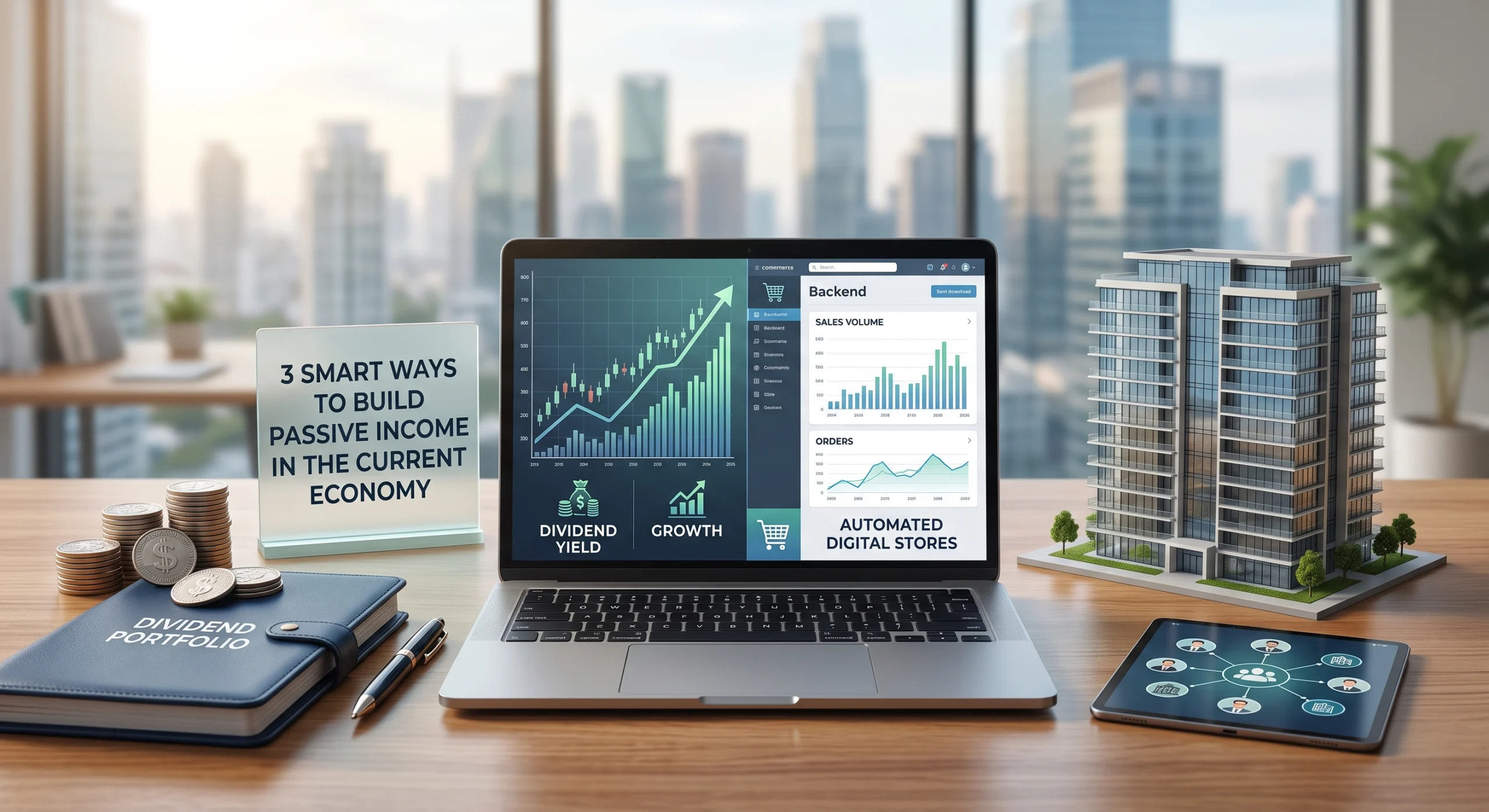
The concept of passive income—earning money while you sleep—has evolved from a luxury to a financial necessity. In the current economic landscape, characterized by fluctuating inflation, shifting interest rates, and an ever-changing job market, relying solely on a single source of active income can leave you financially vulnerable. Building multiple streams of passive revenue is one of the most effective strategies for achieving long-term financial independence and creating a safety net for unpredictable times.
However, the term “passive” is often misunderstood. True passive income rarely means “zero effort.” Instead, it requires a significant upfront investment of either time, money, or both, which eventually yields a recurring return with minimal ongoing maintenance. Whether you have existing capital to deploy or the time to build a digital asset from scratch, there are viable paths available.
In this article, we will explore three smart, distinct ways to build passive income today: dividend investing, real estate crowdfunding, and automated digital stores. We will break down how each method works, evaluate their specific risks and rewards, and help you determine which strategy aligns best with your personal financial goals.
Dividend investing is one of the oldest, most proven methods for generating passive income. When you buy shares in a publicly traded company, you are purchasing a small piece of ownership. Many mature, profitable companies choose to distribute a portion of their earnings back to these shareholders in the form of dividends, usually paid out on a quarterly basis. Instead of relying purely on the stock’s price going up (capital appreciation), you receive regular cash deposits simply for holding the asset.
To minimize risk, many investors focus on “Dividend Aristocrats”—established companies that have consistently increased their dividend payouts for 25 consecutive years or more. Alternatively, Dividend Exchange-Traded Funds (ETFs) allow you to buy a basket of dozens or hundreds of dividend-paying stocks instantly, providing built-in diversification and reducing the risk of relying on a single company.
Risks and Rewards: The primary reward of dividend investing is the highly passive nature of the income. Once the stock or ETF is purchased, absolutely no further action is required to receive payments. Furthermore, reinvesting these dividends can trigger the power of compound interest, exponentially growing your portfolio over time. However, the risks are tied directly to market volatility and corporate performance. If a company experiences financial hardship, it may cut or suspend its dividend. Additionally, the underlying stock value can drop, meaning your overall portfolio could lose value even if you are collecting regular income.
Historically, investing in real estate meant saving up a massive down payment, securing a commercial or residential mortgage, and taking on a second job as a landlord to manage tenants, maintenance, and unexpected repairs. Real estate crowdfunding has completely disrupted this traditional model.
Through online platforms, multiple investors can pool their money together to fund large-scale commercial or residential real estate projects. In exchange for their investment, they receive a proportional share of the rental income generated by the property, as well as a cut of the profits if the property is eventually sold. This democratizes real estate, allowing individuals to invest in multimillion-dollar apartment complexes, commercial storage facilities, or retail spaces with minimum investments sometimes as low as $10 to $500. You gain exposure to the housing market without ever having to answer a late-night tenant phone call.
Risks and Rewards: The main reward is the ability to earn historically stable real estate returns—often keeping pace with or beating inflation—without the headaches of property management. It also provides excellent diversification away from the stock market. On the risk side, real estate crowdfunding investments are highly illiquid. Unlike stocks, you cannot easily sell your shares on a given Tuesday if you need cash. Your money is typically locked up for a predetermined period, often ranging from three to five years or more. Furthermore, the real estate market is subject to economic shifts, changing interest rates, and local market downturns which can affect both rental yields and property valuations.
If you have more time than capital, building an automated digital store is a modern approach to generating income. E-commerce has evolved vastly beyond holding physical inventory in your garage. Today, entrepreneurs can utilize business models like dropshipping, print-on-demand, or selling digital products (such as e-books, budget templates, software, or online courses) to create automated storefronts.
In a print-on-demand or dropshipping model, a customer places an order on your website, and that order is automatically routed to a third-party manufacturer or supplier. That supplier then creates, packages, and ships the item directly to the customer. For digital products, the customer purchases a file and receives an automated download link instantly. Your primary job is to build the storefront, create the designs or digital goods, and set up marketing funnels to drive traffic.
Risks and Rewards: The most significant reward is the scalability and high profit margins, particularly with digital products which cost nothing to duplicate. A successful digital store can generate income 24/7 with very low overhead costs, allowing you to reach a global audience. However, the risk lies heavily in the upfront time investment and the highly competitive nature of e-commerce. You might spend hundreds of hours creating products or building a website that fails to attract buyers. Additionally, this method is better described as “semi-passive.” While the fulfillment is automated, maintaining the income requires ongoing marketing, customer service, and product updates to stay relevant in a fast-moving digital economy.
Building passive income is not a get-rich-quick scheme; it is a deliberate, long-term wealth-building strategy. In the current economy, diversifying your income streams is the smartest way to protect your financial future. Dividend investing offers a traditional, highly passive route for those with existing capital to deploy. Real estate crowdfunding provides accessible, hands-off exposure to property markets. Meanwhile, automated digital stores offer a high-upside, low-cost path for those willing to invest their sweat equity upfront.
Ultimately, the best approach depends on your unique financial situation, risk tolerance, and the resources you have readily available. Many successful investors eventually blend all three. By carefully weighing the pros, cons, risks, and rewards of each method, you can take deliberate steps today toward a more secure, resilient, and financially independent tomorrow.






2 thoughts on “3 Smart Ways to Build Passive Income & Grow Wealth Today”