

 11
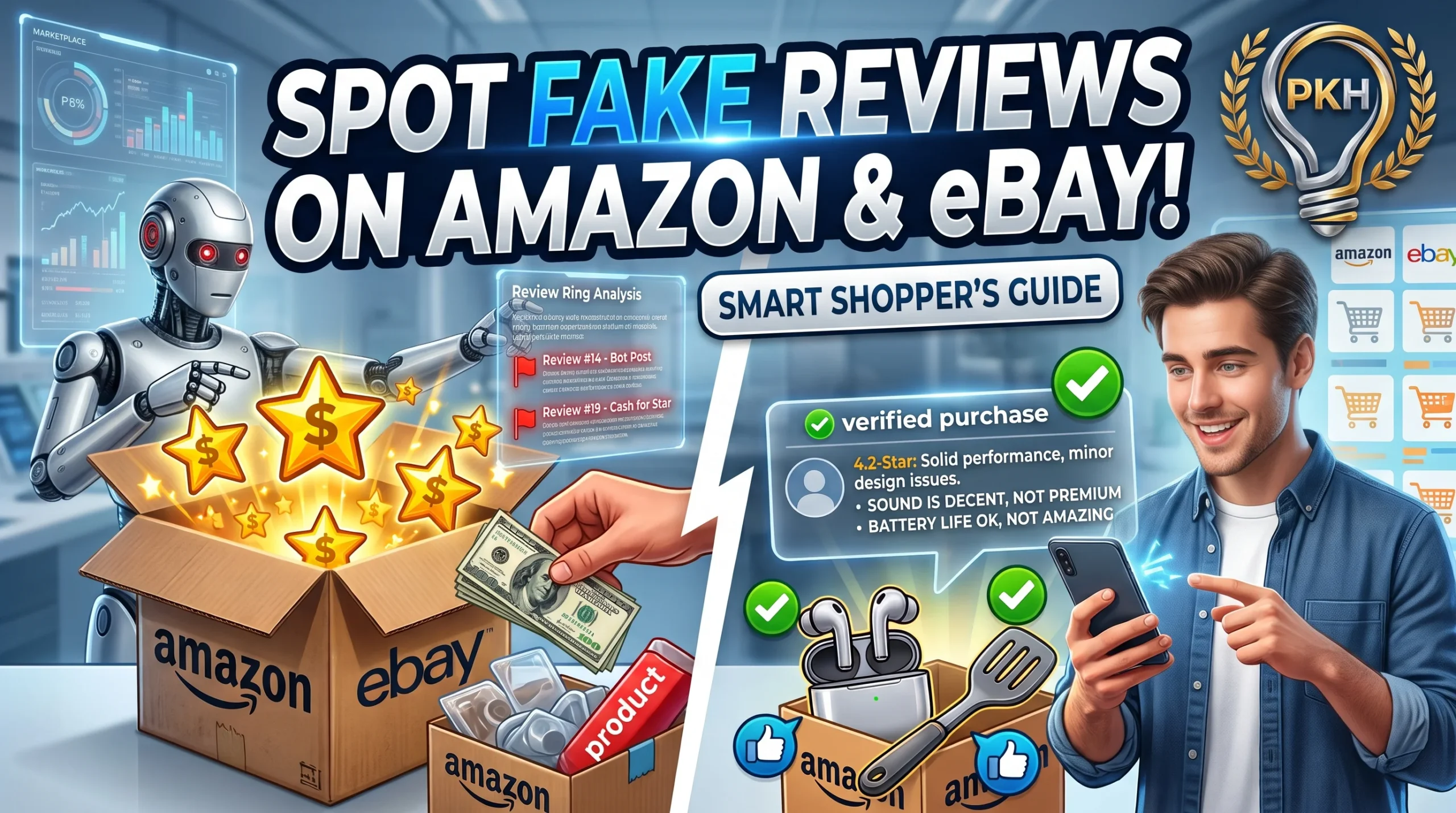
You find the exact gadget you want. It has a 4.8-star rating, over 3,000 glowing reviews, and a price that feels like an absolute steal. You hit “Buy Now,” wait two days, open the box, and realize you just spent hard-earned cash on flimsy plastic junk that dies within a week.
A while back, I fell into this exact trap myself. I bought a set of “premium noise-canceling” earbuds with thousands of five-star ratings. When they arrived, not only was the sound muffled, but tucked inside the box was a small, bright orange scratch-off card: “Claim a $25 Amazon Gift Card! Just leave us a 5-star review and email a screenshot to this address.” That was my wake-up call. The stellar rating was not earned—it was purchased.
Online marketplaces like Amazon and eBay are locked in an ongoing battle against review manipulation. Sellers use review farms, bot networks, and incentivized refund loops to push inferior products to the top of search rankings.
This guide breaks down exactly how fake reviews operate, the telltale red flags I look for before spending a dime, and a simple framework to verify any product before you reach checkout.
Unscrupulous sellers bypass honest business practices using three primary tactics:
Understanding these mechanics makes spotting inconsistencies far easier.
How to protect your online banking and crypto wallets from AI
You do not need specialized forensic tools to identify fake feedback. Spending 60 seconds analyzing the customer reviews tab reveals clear patterns.
Legitimate products accumulate reviews steadily over months or years. If a generic brand launched three weeks ago already has 1,500 reviews—with 80% posted across a single weekend—that indicates an artificial campaign.
Read three or four positive reviews in a row. Notice unnatural repetition? Fake reviewers often copy and paste exact instructions provided by the seller to boost SEO:
Authentic buyers write about specific scenarios: battery life during a morning commute, fit around the shoulders, or assembly difficulties with step four of the manual.
Scroll down to the star rating breakdown. A genuine, high-quality product displays a gradual curve: mostly five stars, a healthy portion of four stars, few threes, and minimal ones and twos.
A manipulated listing often displays a bimodal distribution:
The orange “Verified Purchase” label on Amazon helps, but it is not foolproof. I once investigated a highly-rated meat thermometer listing only to find that the earliest verified reviews praised “how soft the cotton t-shirt feels.” The seller had hijacked an old clothing listing to piggyback on its five-star history. Always match the review text and user-submitted photos to the product currently on the page.
Follow this four-step screening routine whenever you consider a product from an unfamiliar brand:
Online shoppers can audit listings manually or leverage automated tools to analyze review authenticity.
| Criteria | Manual Verification | Free Detection Tools (e.g., Fakespot, ReviewMeta) |
| Speed | 2 to 3 minutes per item | 10 to 15 seconds per link |
| Context Awareness | High; humans catch sarcasm, subtle photos, and mismatched items | Moderate; algorithms sometimes misflag genuine brevity as bot text |
| Data Depth | Limited to visible surface pages | Analyzes historical reviewer profiles and deleted review patterns |
| Best Used For | High-ticket purchases and nuanced product categories | Quick preliminary screening while comparing multiple listings |
Browser extensions and analysis sites analyze listing URLs and assign an adjusted letter grade based on review legitimacy.
Protecting your wallet requires diversifying your research sources beyond the marketplace itself:
Sellers cannot directly delete negative reviews on Amazon. However, they can contact Amazon support to request removal if the review violates community guidelines (such as mentioning delivery delays handled by Amazon fulfillment). On eBay, sellers can appeal negative feedback, but removals require proof that the buyer violated platform policies.
Not always. Unscrupulous merchants use “brushing” schemes or refund programs to facilitate actual transactions. A verified purchase badge confirms an order occurred, but it does not guarantee the reviewer’s opinion is unbiased.
Do not accept it. Including inserts that offer gift cards or free accessories in exchange for positive feedback violates marketplace terms of service. You can report the seller directly through customer support, attach a photo of the insert card, and leave an honest review warning future buyers.
Taking two extra minutes to sort by critical reviews, inspect user-submitted photos, and check seller credentials ensures your online purchases deliver the quality you expect every time you check out.






One thought on “Smart Online Shopping Guide: How to Spot Fake Product Reviews on Amazon and eBay”