
 11
11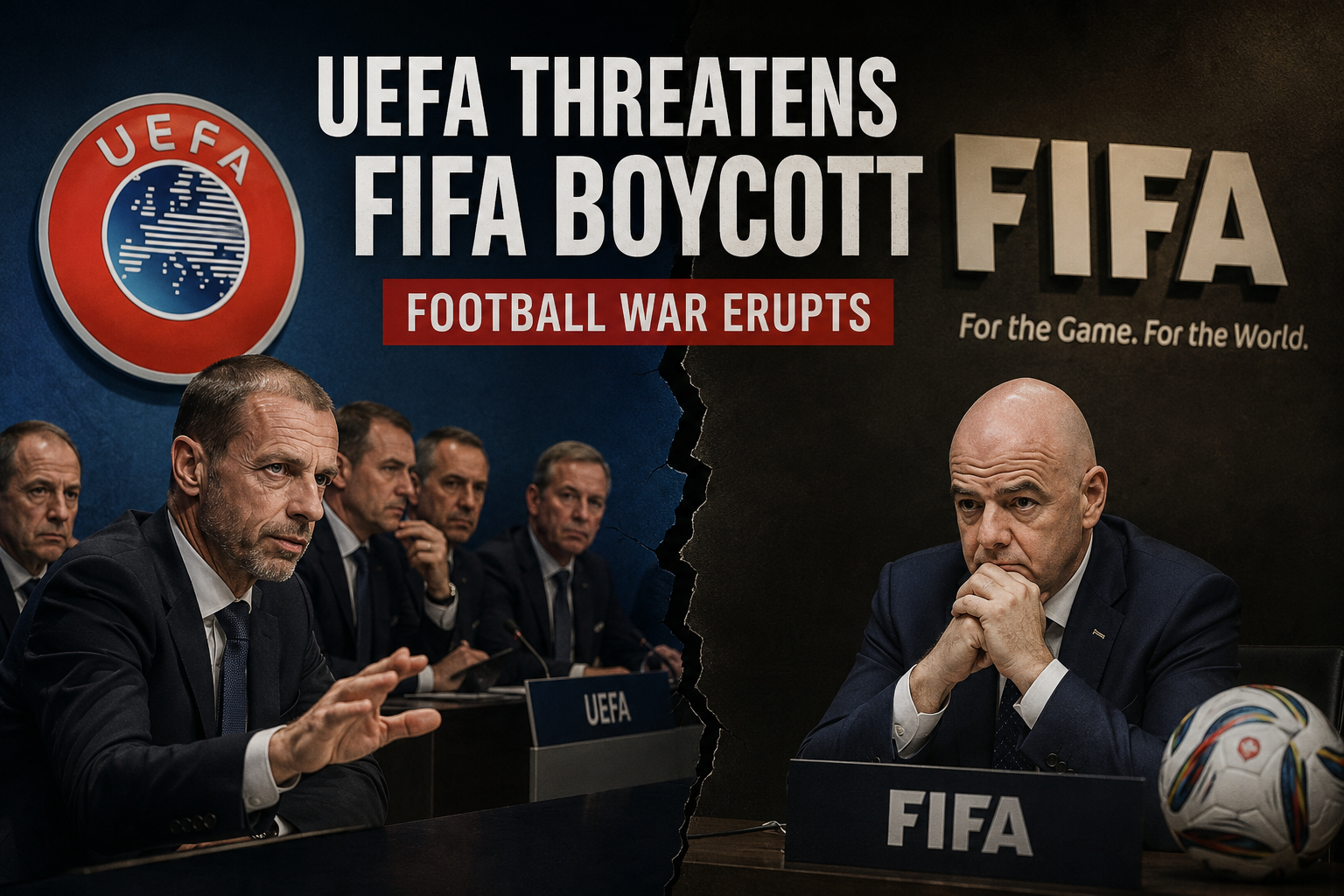
Football’s biggest power struggle in years has erupted, and the outcome could reshape the future of the FIFA World Cup. UEFA has issued its strongest warning yet, signaling that Europe’s football associations could boycott FIFA competitions if controversial commercial plans move forward. As a result, the dispute has captured worldwide attention, leaving fans wondering whether the beautiful game is heading toward an unprecedented divide.
In this article, we break down the latest UEFA boycott news, explain what sparked the conflict, and explore what it could mean for players, supporters, and the future of international football.
The phrase “UEFA FIFA boycott” surged on Google after reports emerged that UEFA’s member associations are prepared to oppose FIFA over plans to restructure the commercial ownership of the FIFA World Cup.
Rather than being a disagreement over rules or scheduling, this conflict centers on who controls football’s biggest tournament and how its commercial rights are managed. As a result, it has become one of the most significant governance disputes football has seen in recent years.
For now, no tournament has been boycotted. However, UEFA’s warning has intensified the debate across the football world.
At the center of the controversy is a reported proposal that would allow private investors to acquire a stake in a new company responsible for managing FIFA’s commercial assets.
Supporters of the proposal argue that outside investment could generate billions of dollars, helping expand football development, infrastructure, and global competitions.
On the other hand, UEFA believes football’s premier tournament should remain under the direct control of football organizations rather than financial investors. European officials fear that increasing private ownership could shift priorities away from sporting values and toward commercial profits.
Because of these opposing views, the disagreement has become the driving force behind the current standoff.
UEFA’s latest position is being viewed as one of its strongest public challenges to FIFA in recent memory.
European football leaders reportedly agreed that if FIFA proceeds with the commercial restructuring without broader agreement, UEFA could consider withdrawing participation from FIFA competitions.
Although no final decision has been announced, the warning sends a powerful message because UEFA represents many of the world’s strongest national teams and football associations.
Consequently, what began as an administrative disagreement has evolved into a global football story.
For supporters, the issue goes far beyond boardroom politics.
If Europe’s leading football nations were ever absent from FIFA competitions, the impact would be enormous.
For example, potential consequences could include:
Even if a boycott never happens, the possibility alone has created uncertainty across the international football landscape.
At this stage, the World Cup is not under immediate threat, and there has been no official confirmation that any nation will refuse to compete.
Instead, UEFA appears to be using the possibility of a boycott as leverage during negotiations.
Football experts believe both organizations have significant reasons to avoid a complete breakdown in relations.
After all, a World Cup without Europe’s biggest football nations would diminish the tournament’s prestige, while UEFA also benefits from maintaining strong international competition.
Therefore, many observers expect further discussions before any irreversible decisions are made.
Modern football generates billions of dollars every year through broadcasting, sponsorships, ticket sales, and digital media.
Supporters of private investment argue that bringing new financial partners into football could unlock additional funding and modernize global competitions.
However, critics worry that investors naturally seek financial returns, potentially influencing decisions that should prioritize players, fans, and sporting integrity.
Ultimately, this philosophical difference lies at the heart of the current disagreement between FIFA and UEFA.
The developing dispute has sparked widespread discussion across social media, sports television, and football forums.
Many fans believe football’s biggest competitions should remain under the control of football organizations rather than outside investors.
Meanwhile, others argue that additional investment could improve facilities, youth development, and the global growth of the sport.
Despite these differing opinions, most supporters agree that cooperation between FIFA and UEFA remains essential for the future of international football.
The coming weeks could prove decisive.
Several outcomes remain possible:
Until then, football fans should understand that the reported boycott remains a warning rather than an official action.
The latest UEFA boycott warning highlights how football’s biggest decisions are no longer limited to what happens on the pitch. Instead, commercial strategy, governance, and financial control are becoming just as important as tactics and trophies.
Whether FIFA adjusts its plans or UEFA softens its position, one thing is certain: the relationship between football’s two most powerful organizations has entered a critical phase.
In the end, negotiations over the coming weeks could determine whether this dispute fades away or grows into one of the biggest governance battles in modern football.
For now, supporters around the world will continue watching closely, hoping that the future of the game is shaped by cooperation rather than conflict.