
 11
11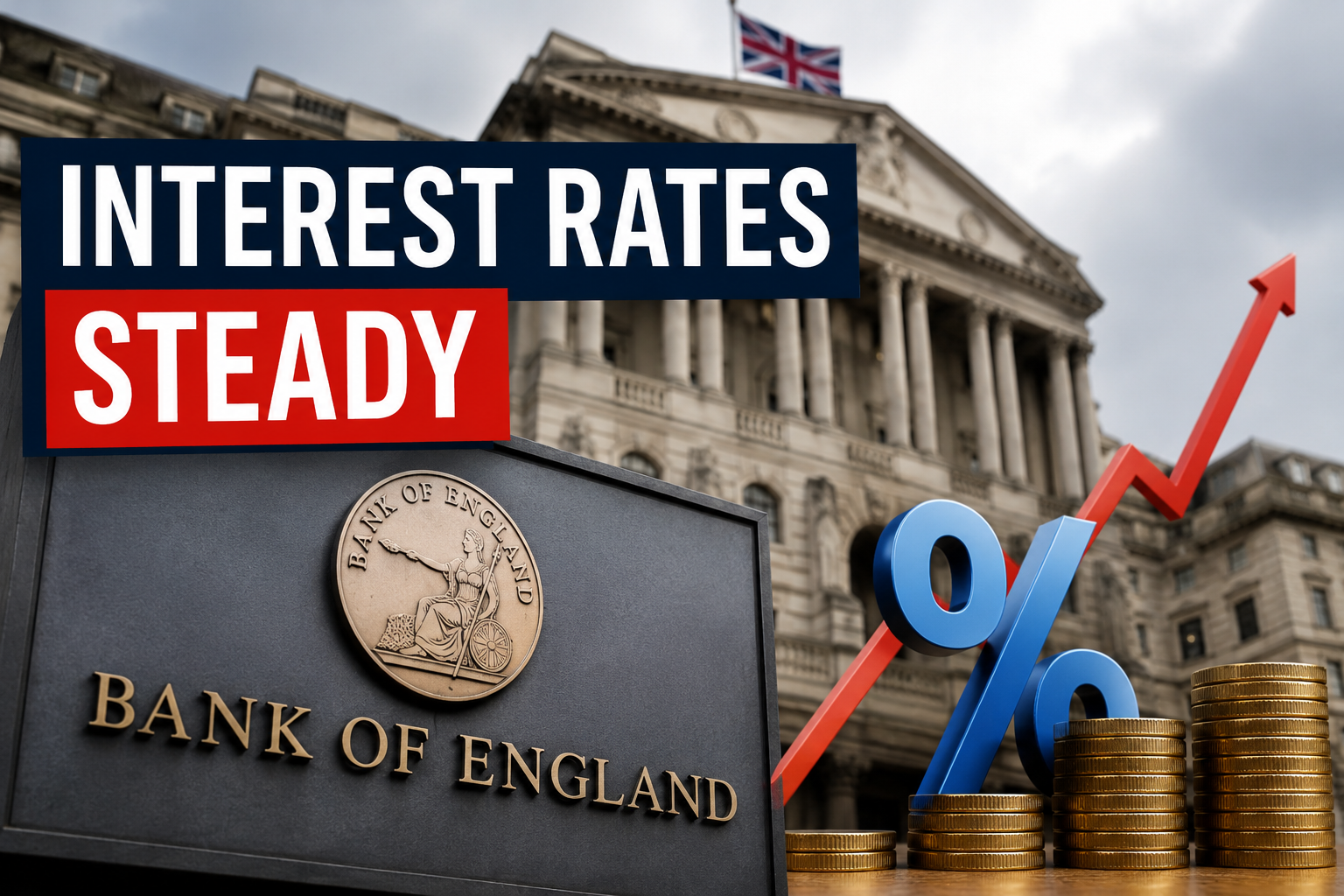
The Bank of England has pressed pause—but that doesn’t mean the pressure is gone. While millions of homeowners, businesses, and investors hoped for a clearer signal on where borrowing costs are heading next, policymakers chose caution over action. The latest decision highlights growing uncertainty around inflation, energy prices, and the UK’s economic outlook, leaving financial markets closely watching what comes next.
The Bank of England (BoE) has decided to leave its benchmark interest rate unchanged at 3.75%, marking another meeting where policymakers opted to wait rather than adjust borrowing costs. The decision reflects the central bank’s effort to balance slowing inflation with fresh risks emerging from higher global energy prices and geopolitical tensions.
Although inflation has eased compared to previous highs, officials believe it is still too early to declare victory. The Monetary Policy Committee (MPC) wants additional evidence that price growth is moving sustainably toward its long-term 2% inflation target before making any major policy shift.
Several economic factors influenced the BoE’s latest decision:
Instead of reacting immediately, the central bank is taking a “wait-and-see” approach while monitoring how these risks affect inflation over the coming months.
Although the majority supported leaving rates unchanged, the vote revealed increasing concern inside the Bank of England.
Three members of the Monetary Policy Committee voted in favor of raising interest rates, arguing that higher energy costs and persistent inflation could require stronger action. The remaining members preferred keeping rates steady until more evidence becomes available.
The split vote suggests that future meetings could become more challenging if inflation begins climbing again.
Keeping interest rates unchanged offers temporary relief for many households.
People with variable-rate mortgages may avoid immediate increases in monthly repayments, while businesses relying on loans gain more certainty for short-term planning. However, borrowing costs remain significantly higher than they were just a few years ago, meaning many families are still feeling financial pressure.
Anyone planning to buy a home or refinance a mortgage should continue watching future Bank of England decisions, as additional rate increases have not been ruled out.
Investors largely expected the Bank of England to keep rates unchanged, so market reactions remained relatively measured.
The British pound showed limited movement following the announcement, while government bond yields fluctuated slightly as traders assessed the possibility of future rate increases. Analysts say markets remain focused on upcoming inflation reports, wage growth, and energy prices, all of which could influence the central bank’s next move.
Economists remain divided.
Some believe slowing inflation will allow the Bank of England to keep rates unchanged for longer. Others argue that if oil prices remain elevated or inflation accelerates again, policymakers may have little choice but to increase borrowing costs later this year.
Future decisions will likely depend on:
The Bank of England’s decision to hold interest rates steady reflects caution rather than confidence. While inflation has improved, policymakers remain concerned that global energy shocks and economic uncertainty could quickly reverse recent progress.
For households, businesses, and investors, today’s announcement provides short-term stability—but it also signals that the fight against inflation is far from over. With future decisions likely to depend on incoming economic data, the path for UK interest rates remains uncertain.