

 11
11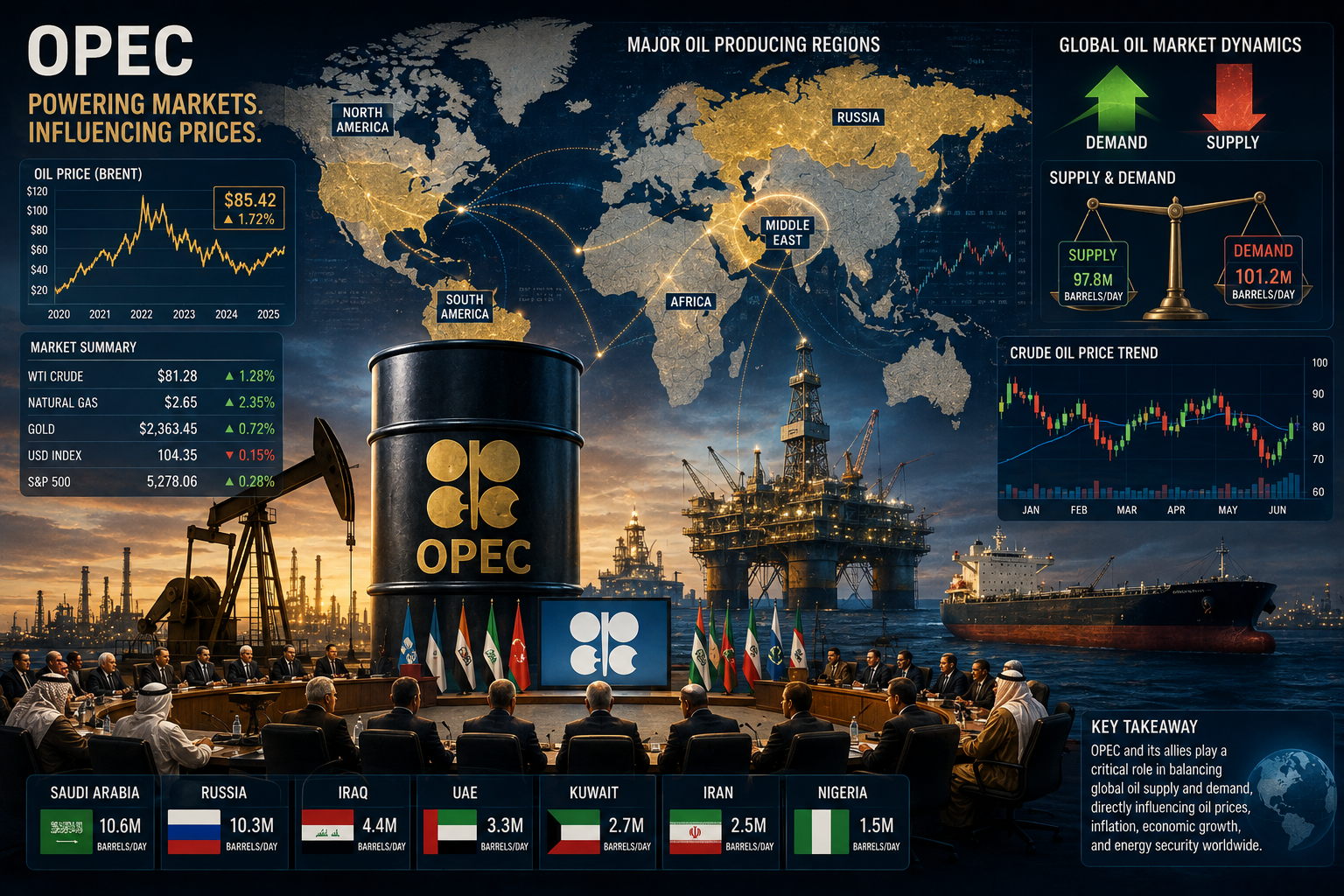
Oil is one of the world’s most valuable resources, powering transportation, manufacturing, electricity generation, and global trade. Because nearly every economy depends on energy, even small changes in oil prices can affect fuel costs, food prices, inflation, and financial markets. Behind many of these price movements is an organization that frequently makes headlines—OPEC.
If you’ve ever wondered what OPEC is and how it influences oil prices, you’re not alone. Investors, economists, businesses, and governments closely monitor OPEC’s decisions because they can shape the direction of the global energy market.
This guide explains what OPEC is, why it was created, how it operates, how it affects oil prices, and why its decisions matter to consumers, businesses, and the global economy.
OPEC stands for the Organization of the Petroleum Exporting Countries. It is an intergovernmental organization made up of major oil-producing nations that coordinate petroleum production policies.
The organization’s primary objective is to promote stability in the global oil market by coordinating oil production among member countries. By working together, OPEC seeks to maintain a balanced supply of oil while supporting stable prices for both producers and consumers.
Today, OPEC remains one of the most influential organizations in the global energy industry because its member countries account for a significant share of the world’s oil reserves and production.
OPEC was established in 1960 by five founding countries:
Before OPEC existed, international oil companies had much greater control over oil production and pricing. Producing nations had limited influence over how their natural resources were managed.
The founders wanted to:
Over time, additional oil-producing countries joined the organization, increasing its global influence.
OPEC focuses on maintaining stability within international oil markets.
Its key goals include:
Rather than setting oil prices directly, OPEC influences prices by adjusting oil production.
The relationship between supply and demand is the foundation of oil pricing.
When supply decreases while demand remains steady, prices usually rise.
When supply increases faster than demand, prices often fall.
OPEC influences this balance through coordinated production decisions.
When oil prices decline significantly, OPEC may decide to reduce production.
Lower supply can help rebalance the market and support higher prices.
If global demand remains constant but millions fewer barrels are produced each day, buyers compete for a smaller supply, often pushing prices upward.
If oil prices become excessively high, OPEC may decide to increase production.
Greater supply helps reduce shortages and can ease upward pressure on prices.
This approach can also support global economic stability by preventing energy costs from becoming too expensive.
Oil prices respond continuously to market conditions.
| Market Condition | Likely Price Impact |
|---|---|
| Higher demand, lower supply | Prices rise |
| Lower demand, higher supply | Prices fall |
| Balanced market | Prices remain relatively stable |
| Unexpected supply disruption | Prices often spike |
OPEC’s production decisions aim to influence this balance rather than dictate exact prices.
In recent years, another important term has become common: OPEC+.
OPEC+ is a broader alliance that includes OPEC members along with several major non-member oil-producing countries.
The purpose of this expanded partnership is to coordinate production more effectively across a larger share of global oil output.
Because these additional producers contribute significant volumes of oil, OPEC+ decisions often have an even greater impact on global energy markets than OPEC acting alone.
OPEC does not base its decisions on a single factor.
Instead, it considers numerous economic and geopolitical conditions.
Economic growth generally increases demand for fuel.
During slower economic periods, oil consumption often declines.
OPEC evaluates production from both member and non-member countries.
If non-OPEC production increases significantly, OPEC may adjust its own output.
Global recessions often reduce fuel demand.
Periods of strong economic growth usually increase energy consumption.
Large oil inventories may indicate oversupply.
Low inventories can signal tighter markets.
Conflicts, sanctions, and political instability can disrupt oil production and exports.
These developments frequently influence OPEC’s production strategy.
Many people assume OPEC only affects oil companies.
In reality, its decisions influence everyday life.
When oil prices rise, consumers often experience:
When oil prices decline, transportation and production costs may fall, helping reduce inflationary pressure.
Energy is a major input for nearly every industry.
Higher oil prices increase costs across supply chains.
Businesses frequently pass these costs on to customers through higher prices.
This contributes to inflation, especially when oil price increases persist.
Because inflation affects the entire economy, central banks closely monitor developments in the oil market.
Although OPEC and central banks have different responsibilities, their actions are closely connected.
If rising oil prices contribute to persistent inflation, central banks may raise interest rates to slow economic activity and stabilize prices.
Several sectors are particularly sensitive to oil price movements.
| Industry | Impact |
|---|---|
| Airlines | Fuel costs increase |
| Transportation | Shipping expenses rise |
| Manufacturing | Production becomes more expensive |
| Agriculture | Equipment and transportation costs increase |
| Logistics | Freight prices rise |
| Chemicals | Raw material costs increase |
| Retail | Distribution expenses increase |
These effects often spread throughout the economy.
No.
This is one of the most common misconceptions.
While OPEC has considerable influence, it cannot fully control global oil prices.
Oil prices also depend on:
The market reflects all these factors simultaneously.
Imagine global demand for oil increases sharply because economies are growing.
At the same time, production remains unchanged.
Oil prices begin climbing.
OPEC may decide to increase production to help balance supply and demand.
Conversely, if global demand weakens during an economic slowdown, OPEC may reduce production to help stabilize prices.
These coordinated actions demonstrate how production adjustments influence the broader market.
Investors closely monitor every major OPEC meeting.
Announcements about production targets often affect:
Sometimes markets react within minutes of official announcements.
Supporters argue that OPEC provides several advantages.
These include:
Stable markets benefit producers and consumers alike.
Like any major international organization, OPEC also faces criticism.
Some concerns include:
Different economists hold different opinions regarding OPEC’s overall impact on the global economy.
The global energy landscape is changing.
Several long-term trends may influence OPEC’s future role.
These include:
Although demand patterns may evolve over time, oil is expected to remain an important global energy source for years to come.
As a result, OPEC is likely to continue playing a significant role in international energy markets.
OPEC stands for the Organization of the Petroleum Exporting Countries, an international organization that coordinates oil production policies among member nations.
No. OPEC does not directly set prices. Instead, it influences prices by adjusting oil production, which affects the balance between supply and demand.
Production cuts are typically intended to reduce oversupply, stabilize markets, and support oil prices when demand weakens.
OPEC+ is a broader alliance that includes OPEC members and several non-member oil-producing countries working together to coordinate production policies.
Higher oil prices can increase transportation, manufacturing, and production costs. Businesses often pass these costs to consumers, contributing to inflation.
Production announcements can significantly influence oil prices, inflation expectations, stock markets, currencies, and overall economic sentiment.
Understanding what OPEC is and how it influences oil prices provides valuable insight into one of the world’s most important economic relationships. Rather than directly setting oil prices, OPEC works by coordinating production among member countries to influence the balance between global supply and demand.
Its decisions can affect fuel prices, inflation, transportation costs, business expenses, and financial markets around the world. At the same time, oil prices are shaped by many other forces, including economic growth, geopolitical events, technological change, and consumer demand.
Whether you’re following global news, investing in financial markets, running a business, or simply managing household expenses, understanding OPEC’s role helps explain why energy prices rise and fall—and why those changes matter far beyond the oil industry.




One thought on “What Is OPEC? Understanding How OPEC Influences Oil Prices”