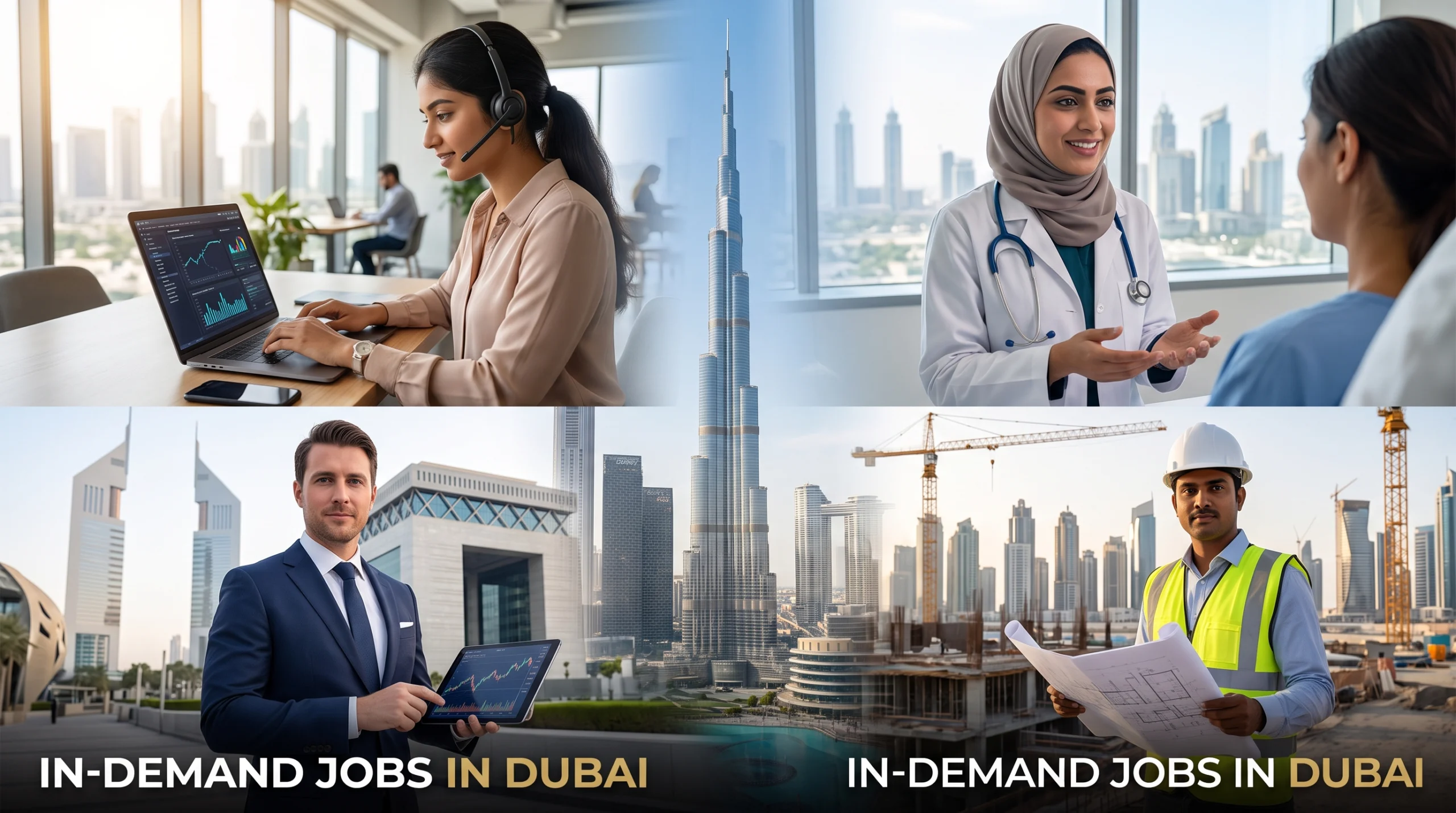
The United Arab Emirates (UAE), with Dubai at its forefront, has long served as a glittering magnet for ambitious expatriates from every corner of the globe. Known for its futuristic skyline, unparalleled standard of living, and strategic geographical position connecting the markets of the East and the West, Dubai offers an exceptional environment for professional growth. For expatriate workers, one of the most compelling incentives to relocate is the tax-free salary structure. When combined with rapid career progression, top-tier infrastructure, a highly secure environment, and a vibrant multicultural society, Dubai stands out as a premier global destination for top-tier talent.
However, the UAE’s job market is not static; it is currently undergoing a massive and dynamic transformation. Driven by forward-thinking government blueprints like the Dubai Economic Agenda (D33) and the UAE Centennial 2071, the nation is pivoting rapidly from an oil-dependent economy to a diversified, knowledge-based, and digitally driven ecosystem. This economic evolution has spawned a wealth of new opportunities across a wide array of specialized sectors.
This comprehensive guide is designed for professionals looking to make the leap to the Middle East. It explores the most in-demand jobs in Dubai for expats, details average monthly salary expectations, outlines the essential skills required for each field, and provides a complete, step-by-step breakdown of the standard Employment Visa and the highly coveted UAE Golden Visa processes.
The Evolving Landscape of Dubai’s Job Market
Historically, the Dubai job market was dominated by massive booms in real estate, hospitality, retail, and the oil and gas sectors. While these industries remain critical foundational pillars of the economy, today’s landscape is significantly more diversified and complex. Technological innovation, environmental sustainability, advanced healthcare, and global finance have taken center stage.
The continuous influx of foreign direct investment and the establishment of industry-specific free zones—such as Dubai Internet City, Dubai Healthcare City, and the Dubai International Financial Centre (DIFC)—have created specialized micro-ecosystems. These free zones offer 100% foreign ownership, robust legal frameworks, and zero corporate tax for certain activities, encouraging multinational corporations to set up their regional headquarters in the city. Consequently, this corporate migration continuously fuels the demand for highly skilled, experienced expatriate professionals capable of navigating a globalized business environment.
Top 5 In-Demand Job Sectors in Dubai
The following table provides a high-level overview of the top five booming job sectors for expats in Dubai, along with their average monthly salary ranges.
Note: Salaries are represented in United Arab Emirates Dirhams (AED) and can vary significantly based on a candidate’s years of experience, specific qualifications, nationality, and the hiring organization’s scale.
Job Sector
Average Monthly Salary Range (AED)
Key Roles / Job Titles
Information Technology (IT)
15,000 – 45,000
Software Developer, Cybersecurity Analyst, AI Specialist, Cloud Architect
Healthcare
20,000 – 60,000
Specialist Physician, Registered Nurse, Medical Director, Allied Health Professional
Sustainability Consultant, Solar PV Engineer, Environmental Scientist
Sector Deep-Dive: Required Skills and Opportunities
To secure a highly compensated position in these competitive sectors, expats must possess specific, modern skill sets. Below is a detailed breakdown of what recruiters and employers in Dubai are prioritizing today.
1. Information Technology (IT)
Dubai is aggressively positioning itself as the technological capital of the Middle East. With heavy government investments in artificial intelligence, blockchain, smart city initiatives, and the metaverse, the demand for cutting-edge IT professionals has skyrocketed. The government’s relentless push to digitize all public services ensures this sector will remain robust.
Required Skills:
Artificial Intelligence & Machine Learning: Proficiency in Python, R, neural networks, predictive analytics, and deploying generative AI solutions.
Cybersecurity: Advanced skills in threat analysis, ethical hacking, cloud security architecture, and strict compliance with the UAE’s evolving data protection laws.
Cloud Computing: Hands-on expertise in AWS, Microsoft Azure, and Google Cloud infrastructure, migration, and maintenance.
Data Science & Analytics: The ability to interpret big data using SQL, Tableau, PowerBI, and Hadoop to drive business decisions.
Software Development: Full-stack development capabilities (JavaScript frameworks, React, Node.js, Java, C++) and mobile app development.
2. Healthcare
The UAE’s healthcare sector is expanding at an unprecedented rate, driven by a rapidly growing population, an influx of medical tourists, and a government mandate to provide world-class medical facilities. The Dubai Health Authority (DHA) enforces strict medical standards, meaning only highly qualified and licensed medical professionals are recruited.
Required Skills:
Clinical Excellence: Advanced board certifications (e.g., US Board, UK CCT, or equivalent) and specialized training in high-demand fields like cardiology, endocrinology, and orthopedics.
Regulatory Familiarity: A clear understanding of DHA regulations and the rigorous licensing procedures required to practice in the emirate.
Patient Communication: Exceptional interpersonal skills and cultural sensitivity; bilingual abilities (English and Arabic) offer a massive competitive advantage.
Health Tech Proficiency: Experience utilizing electronic health records (EHR) systems and modern telemedicine platforms.
Specialized Nursing: Niche nursing skills, particularly in Intensive Care Units (ICU), neonatal care, and emergency room triage.
3. Finance & Banking
Dubai is the undisputed financial nerve center of the region. The DIFC serves as a global financial bridge, accommodating international banks, massive wealth management firms, and a rapidly expanding FinTech ecosystem. Furthermore, the recent introduction of Corporate Tax in the UAE has created a massive surge in demand for tax advisors, auditors, and corporate accountants.
Required Skills:
Regulatory Compliance: Deep, up-to-date knowledge of international financial regulations, Basel III, and rigorous anti-money laundering (AML) protocols.
FinTech Innovation: A strong understanding of blockchain integrations, digital currencies, open banking, and payment gateways.
Corporate Finance & Tax: Expertise in corporate tax laws, financial auditing, and international financial reporting standards (IFRS). Qualifications like ACCA, CPA, or CFA are highly sought after.
Wealth Management: Proven portfolio management and bespoke advisory skills tailored for high-net-worth individuals (HNWIs) and family offices.
Risk Management: Advanced quantitative analysis, financial modeling, and stress-testing abilities.
4. Construction & Engineering
Despite occasional economic fluctuations, Dubai’s skyline is in a constant state of evolution. From massive transportation infrastructure projects to hyper-luxury residential island developments, construction and engineering remain fundamental to the city’s identity. Today, there is a prominent shift toward smart building technologies, 3D printing in construction, and sustainable architecture.
Required Skills:
Project Management: PMP or PRINCE2 certification, paired with a proven track record of delivering multi-million-dollar mega-projects on time and strictly within budget.
BIM (Building Information Modeling): Advanced proficiency in modern architectural software like AutoCAD, Revit, and Navisworks.
Civil & Structural Engineering: Specialized expertise in high-rise construction, geotechnical engineering, and innovative materials science.
Sustainable Architecture: Comprehensive knowledge of LEED certification requirements, green building codes, and energy-efficient design principles.
Contract Management: Deep familiarity with FIDIC contracts, dispute resolution, and local UAE construction laws.
5. Renewable Energy
In direct alignment with the “UAE Net Zero by 2050” strategic initiative, the renewable energy sector is experiencing a historic boom. Landmark projects like the Mohammed bin Rashid Al Maktoum Solar Park highlight the nation’s unyielding commitment to green energy. This has birthed a highly lucrative job market for environmental and energy professionals.
Required Skills:
Solar PV Engineering: End-to-end design, installation, commissioning, and maintenance of utility-scale photovoltaic grid systems.
Energy Auditing: The ability to conduct comprehensive energy consumption assessments for commercial buildings and recommend high-impact efficiency upgrades.
Environmental Impact Assessment (EIA): Analytical skills to assess and mitigate the ecological footprint of large-scale industrial and construction projects.
Sustainability Reporting: Familiarity with ESG (Environmental, Social, and Governance) corporate frameworks and global reporting standards.
Project Finance: Understanding the complex financial modeling, green bonds, and funding mechanisms necessary to launch green energy projects.
Navigating the UAE Visa System
Relocating to Dubai requires successfully navigating the UAE’s immigration system. While the process is highly digital, streamlined, and efficient, it is vital to understand the exact legal procedures. For professionals, there are two primary routes: the standard Employment Visa and the long-term Golden Visa.
The Official Process for a Dubai Employment Visa
For the vast majority of expats, the Dubai journey begins with a standard Employment Visa. This visa is entirely sponsored by your employer, who bears the associated costs. It is strictly illegal to work in the UAE on a tourist or visit visa.
Job Offer and Contract Signing: The process formally initiates when you sign an official job offer letter. The employer will then draft an official employment contract according to the Ministry of Human Resources and Emiratisation (MOHRE) guidelines.
MOHRE Approval (Labour Quota): Your employer applies to MOHRE to request a quota approval, proving they are legally authorized to hire a foreign worker for your specific role.
Issuance of the Entry Permit (Pink Visa): Once MOHRE approves the request, the General Directorate of Residency and Foreigners Affairs (GDRFA) issues an electronic Employment Entry Permit. Often referred to as a “pink visa,” this document allows you to legally enter the UAE for work. It is typically valid for 60 days.
Medical Fitness Test: Immediately upon arriving in Dubai, you must undergo a mandatory medical fitness test at a government-approved screening center. This test screens for communicable diseases, primarily HIV, Hepatitis B and C, and Tuberculosis.
Emirates ID Application: Concurrently with the medical test, you must apply for your Emirates ID. This requires a visit to an Emirates Identity Authority (ICP/EIDA) typing center to capture your biometric data (fingerprints and digital photograph).
Health Insurance Activation: By UAE law, employers must provide health insurance for their employees. Your policy must be activated before the final visa can be issued.
Visa Stamping and Digital Residency: The final step is the official issuance of your residency. While passports historically received a physical visa stamp, the UAE has transitioned to a fully digital system. Your Emirates ID now serves as your official proof of residency and your primary identification document.
The UAE Golden Visa: A Game Changer for Expats
Introduced to attract and retain elite global talent, the UAE Golden Visa completely revolutionized the expatriate experience. It offers self-sponsored, long-term residency (valid for 10 years and renewable) without the need for an employer sponsor. This grants professionals unprecedented career mobility, stability, and freedom.
Who is Eligible?
While available to massive investors and exceptional students, the criteria for skilled professionals are highly specific:
Occupational Classification: Your job role must fall under the first or second occupational level as classified by MOHRE (generally encompassing managers, executives, and high-level professionals in scientific, technical, and human fields).
Educational Requirements: You must hold a Bachelor’s degree (or equivalent) from an accredited university.
Salary Threshold: Your basic monthly salary must be no less than AED 30,000 (or its equivalent in a foreign currency).
Employment Status: You must possess a valid employment contract within the UAE.
Specialized Talents: Doctors, highly published scientists, notable creative professionals (artists, authors), and tech innovators can also apply under a separate sub-category, often requiring endorsement from relevant UAE ministries.
The Official Application Process for the Golden Visa:
Eligibility Verification: Begin by verifying your eligibility through the Federal Authority for Identity, Citizenship, Customs and Port Security (ICP) portal or the GDRFA website.
Document Gathering and Attestation: Collect your educational degrees, which must be fully attested (notarized in your home country, legalized by the Ministry of Foreign Affairs, and stamped by the UAE Embassy). You will also need a salary certificate from your employer confirming the AED 30,000+ income, a 6-month bank statement, and a comprehensive health insurance policy.
Application Submission: Submit your application digitally via the ICP or GDRFA smart platforms. Alternatively, you can visit registered “Amer” typing centers across Dubai for assisted processing.
Initial Approval: Authorities will review the submitted documents. Upon successful review, you will receive an initial approval notification via email/SMS.
Cancellation of Current Visa (If applicable): If you are already working in the UAE on a standard employment visa, you must request your employer to formally cancel your current visa before proceeding.
Medical Fitness Test: A new medical fitness test is standard protocol, even if you are simply upgrading your visa status from within the country.
Issuance of the Golden Visa: Once medical results are cleared, the 10-year Golden Visa is issued, and a new Emirates ID is printed. Notably, the Golden Visa allows you to sponsor your spouse, children of any age, and domestic helpers, providing total security for your family.
Practical Tips for Relocating Professionals
Relocating to Dubai is an incredibly rewarding endeavor, but ensuring a smooth transition requires meticulous preparation:
Cost of Living Considerations: While salaries are tax-free, Dubai is a premium global city. Calculate your expected expenses carefully. Housing (rent is usually paid in 1 to 4 post-dated cheques annually), schooling for children, and transportation will consume a large portion of your income. Negotiate your compensation package to include allowances for housing and education.
Document Attestation: Do not wait until you land in Dubai to attest your degrees and marriage certificates. The attestation process can take weeks in your home country and is an absolute necessity for visa processing and family sponsorship.
Strategic Networking: The Dubai job market relies heavily on networking. Optimize your LinkedIn profile, as it is heavily utilized by local headhunters. Register with top regional job portals such as GulfTalent, Bayt, and Naukrigulf, and consider attending major industry exhibitions (like GITEX for IT or Arab Health for Healthcare) to connect directly with regional directors.
Cultural Etiquette: Understanding and respecting Islamic culture and local Emirati customs will go a long way in both your personal integration and professional success. Modesty in business attire and respect for local workplace hierarchies are highly valued.
By targeting the high-growth sectors highlighted above, upskilling to meet modern demands, and mastering the nuances of the visa system, expats can strategically position themselves to build a thriving, lucrative, and long-term career in the heart of the Middle East.


 1