
 11
11
Some dresses are beautiful. Others become part of fashion history. You can forget the award someone won, the movie they were promoting, or even the year an event happened—but remember exactly what a celebrity was wearing. That is what makes an iconic dress different from an ordinary red-carpet look.
Think of Audrey Hepburn in her little black Givenchy dress, Marilyn Monroe in the sparkling gown she wore to sing “Happy Birthday” to President John F. Kennedy, or Jennifer Lopez arriving at the 2000 Grammys in that unforgettable green Versace dress.
These weren’t simply outfits.
They became moments. And that is why the most iconic celebrity dresses of all time continue to influence designers, stylists, fashion editors, and everyday shoppers decades later. Some were elegant. Some were shocking. Some were completely outrageous. A few were so unusual that people still argue about them years later. But they all had one thing in common: People remembered them.
A dress doesn’t become iconic just because it is expensive or designed by a famous fashion house. Sometimes the most memorable dresses are surprisingly simple.
What usually matters is the combination of several things:
Timing matters too. A dress can be beautiful but disappear from memory within a few weeks. Another can become so connected with a celebrity that the two are almost impossible to separate. That is exactly what happened with many of the dresses below.
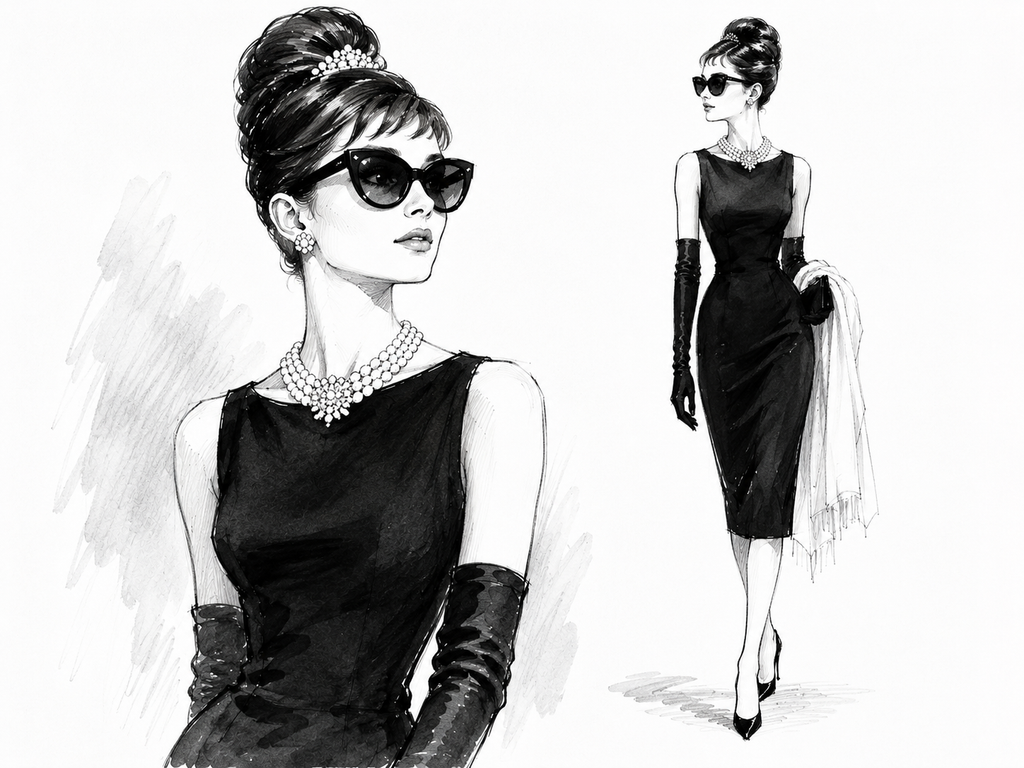
Few celebrity fashion moments have survived as well as Audrey Hepburn’s black Givenchy dress from Breakfast at Tiffany’s. The 1961 film helped turn Hepburn’s character, Holly Golightly, into one of cinema’s most recognizable fashion figures. The look was simple but incredibly polished: a long black dress, pearls, long gloves, sunglasses, and Hepburn’s famous elegant hairstyle. The British Film Institute describes the Givenchy look as one of the defining images of Hepburn’s career, noting that the style continued to be widely copied for decades.
Even more interestingly, a version of the dress is preserved by the Museo del Traje in Madrid. The museum describes it as a long black Givenchy evening gown with a fitted waist and a dramatic opening in the skirt. The lesson from this dress is still useful today: Simple does not mean boring. A well-cut black dress with the right accessories can look more timeless than something covered in decoration.
The dress helped define the modern little black dress as a symbol of effortless elegance. And you don’t need an exact Givenchy replica to borrow the idea. A simple black midi dress, elegant sunglasses, pearls, and a polished hairstyle can still create that old-Hollywood feeling.
Then there is the dress that became inseparable from one of Marilyn Monroe’s most famous public appearances. On May 19, 1962, Monroe performed “Happy Birthday” for President John F. Kennedy at Madison Square Garden. She wore a sparkling, body-hugging gown created by costume designer Jean Louis. The dress was covered in thousands of crystals and was designed to fit extremely closely to Monroe’s body. The performance lasted only a short time.
The fashion moment lasted for generations. The original gown later became extraordinarily valuable. Ripley’s Believe It or Not reports that the dress sold at auction for $4.8 million and now forms part of its collection. What makes this dress so powerful is that it was not simply revealing or glamorous. It was specific to the moment. Marilyn Monroe wore it for an event that was already attracting enormous attention. The dress, the performance, the photographs, and the celebrity herself all came together. That combination is almost impossible to recreate.
Before the modern red carpet existed, Hollywood actresses were already creating fashion history on screen. Rita Hayworth did exactly that in the 1946 film Gilda. Her black satin dress was designed by Jean Louis, the same costume designer who later created Marilyn Monroe’s famous JFK gown. The dress became closely associated with Hayworth’s glamorous femme-fatale image. There is something fascinating about this dress. It isn’t covered in crystals. It doesn’t have a huge train. It doesn’t need complicated styling.
It is essentially a black satin dress with a strong silhouette. Yet it became one of the defining fashion images of classic Hollywood. That is a useful reminder that a truly great dress does not need to scream for attention. Sometimes it simply needs the right shape.
Now we move from old Hollywood glamour to something much more daring.In 1994, Elizabeth Hurley attended the premiere of Four Weddings and a Funeral wearing a black Versace dress held together with oversized gold safety pins. The dress became known simply as “That Dress.” The Metropolitan Museum of Art’s fashion collection describes the 1994 Versace gown as a defining example of the designer’s use of punk-inspired safety pins. It was provocative, unexpected, and very different from traditional Hollywood glamour. That was exactly why people remembered it.
Hurley’s dress also helped push the safety-pin detail into mainstream fashion conversations. Years later, designers and celebrities continued to reference the look. Even Zendaya’s dramatic Louis Vuitton gown was compared with Hurley’s famous Versace dress because of its similarly bold, revealing construction. Iconic fashion doesn’t always have to be elegant. Sometimes it simply has to be brave.
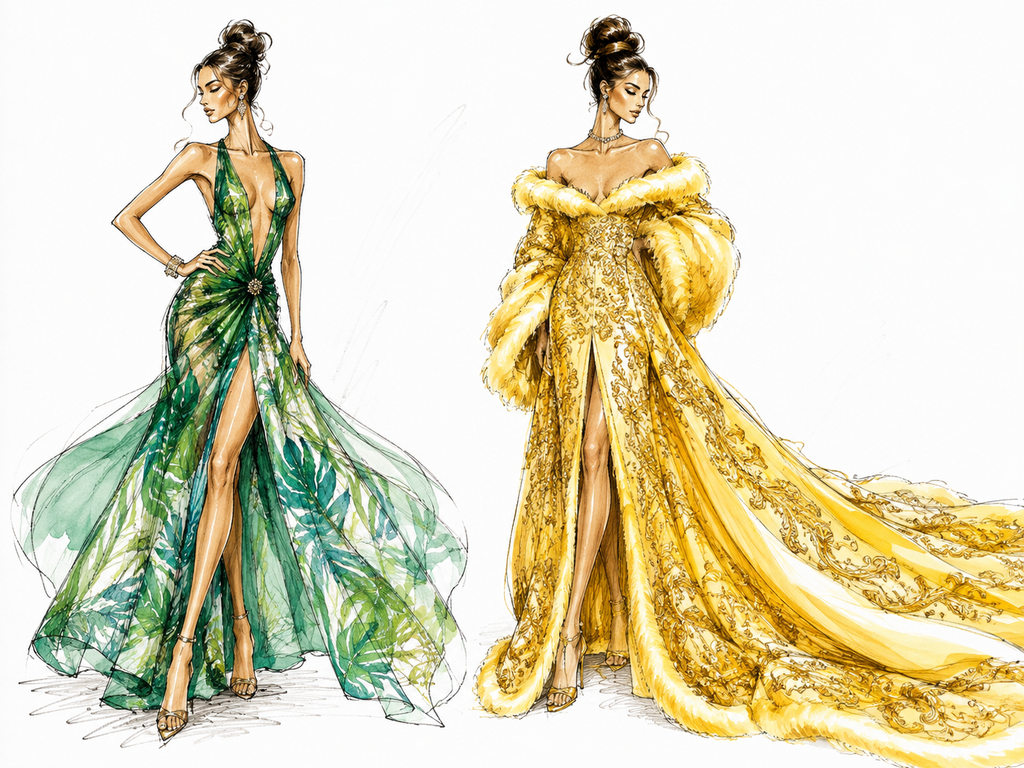
If there is one celebrity dress that proves the power of a single photograph, this might be it. At the 2000 Grammy Awards, Jennifer Lopez walked onto the red carpet wearing a plunging green Versace silk-chiffon dress with a tropical print. The dress became an immediate sensation. It was so heavily searched that Google has since credited the moment with helping inspire the creation of Google Image Search. The Recording Academy itself still describes Lopez’s appearance in the dress as an iconic Grammys fashion moment.
The dress was actually not new to celebrity fashion. It had appeared on the runway and had been worn by other stars. But Lopez’s appearance changed everything. More than two decades later, the dress still appears in fashion retrospectives, recreations, and pop-culture references. That is what makes this dress so interesting. The right celebrity can completely change the meaning of a fashion piece.
Few celebrity dresses are connected to a personal story as strongly as Princess Diana’s famous black off-shoulder dress. Diana wore the Christina Stambolian dress to a Serpentine Gallery event in London in 1994. The dress was elegant but daring for the royal image people were used to seeing. Its off-shoulder neckline, fitted shape, and short hemline made it dramatically different from the more conservative clothing associated with royal appearances. But the reason people still talk about it is not just the dress. It was the timing.
Diana wore it on the same evening that a television interview involving Prince Charles’ infidelity became a major public story. The dress therefore became known as the “revenge dress.” Whether or not that nickname perfectly captures Diana’s intention, the cultural association has become almost impossible to separate from the outfit. And that is another lesson in iconic fashion: Context can make a dress unforgettable.
If we’re talking about iconic celebrity fashion, it would be impossible to leave Cher out. Cher’s long relationship with designer Bob Mackie produced some of the most recognizable celebrity looks of the 1970s and 1980s. Her outfits were often glamorous, dramatic, sheer, heavily decorated, and deliberately different from conventional red-carpet dressing. Her famous 1980s awards-season looks helped establish the idea that a celebrity could treat the red carpet almost like a stage.
Recent fashion retrospectives continue to highlight Cher’s bold Bob Mackie outfits as central to her fashion legacy. And there is something refreshing about Cher’s approach. She never seemed interested in dressing simply because everyone else was doing it. She dressed to create an image. That confidence became part of the fashion.
Not every iconic dress is traditionally beautiful. Some are memorable because they are completely unexpected. Björk proved that at the 2001 Academy Awards when she arrived wearing the now-famous swan dress designed by Marjan Pejoski. The outfit looked more like an art piece than a conventional evening gown. And yes, people talked about it. A lot.
The dress became one of the most recognizable—and most debated—Oscar outfits ever. But that is exactly why it belongs on this list. Fashion doesn’t always have to be about looking conventionally glamorous. Sometimes fashion is about making people feel something.
Surprise.
Confusion.
Amusement.
Curiosity.
Even criticism.
If people are still discussing the dress years later, it has already achieved something most outfits never will.
Then came a dress that completely changed the idea of what a celebrity fashion statement could be. At the 2010 MTV Video Music Awards, Lady Gaga wore a dress made from raw beef. It was designed by Franc Fernandez and styled by Nicola Formichetti. The outfit caused immediate controversy and was discussed far beyond the fashion world. It was even named by Time as the top fashion statement of 2010. Whether someone loved it or hated it, nobody could call it forgettable. And that is the point.
Lady Gaga’s fashion has often treated clothing as part of performance art. The meat dress was not designed to be a timeless evening gown. It was designed to make a statement. That is why it belongs in fashion history.
Sometimes one tiny detail can become the entire story. At the 2012 Academy Awards, Angelina Jolie wore a black velvet Versace gown with a dramatic thigh-high slit. The dress itself was elegant and relatively simple. But Jolie’s pose—one leg extended through the slit—quickly became the visual focus of the evening. The image spread across the internet and became a major pop-culture moment. The dress is still regularly mentioned among memorable Oscar fashion moments.
This is a great example of how styling and body language can change a dress. Without the pose, it was a beautiful black gown. With the pose, it became a meme. And suddenly millions of people remembered it.
Some dresses don’t simply enter a room. They take over the room. That was the case when Rihanna arrived at the 2015 Met Gala wearing a spectacular yellow Guo Pei couture gown. The look featured a dramatic fur-trimmed train that stretched for many feet behind her. Vogue has repeatedly included the outfit among the most memorable Met Gala looks, noting its extraordinary train and the huge amount of embroidery involved. What makes this particular moment even more interesting is the relationship between celebrity and designer.
Rihanna discovered Guo Pei’s work while researching Chinese couture. The gown took about two years to make, according to Vogue’s coverage. The appearance helped introduce Guo Pei’s work to a much wider Western audience. So this wasn’t just a celebrity wearing a beautiful dress. It was a fashion introduction. And that is powerful.
Before her famous sparkling gown, Marilyn Monroe had another dress that became part of cinema history. The white halter dress she wore in The Seven Year Itch became one of the most recognizable movie costumes ever. The scene is simple: Monroe stands over a subway grate as air blows upward, lifting the skirt of her dress. The image became so famous that the dress eventually became almost inseparable from Monroe’s public image.
British Vogue includes the white dress among the most famous celebrity white dresses in fashion history. What makes it interesting is how little the dress itself needed. It was white. It was simple. And it became unforgettable because of the scene surrounding it.
There is a broader lesson in celebrity fashion that goes beyond individual dresses. A celebrity outfit becomes iconic when it creates a strong visual idea. Black against white. Red against a neutral background. A huge train against a simple staircase. A dramatic neckline against minimal jewelry.
A simple dress against a famous location. That’s why so many iconic dresses are surprisingly easy to describe. You remember the main visual idea. And that is exactly what modern fashion brands try to recreate when they sell celebrity-inspired dresses.
Looking at these outfits together, an interesting pattern appears. They are very different.
Audrey Hepburn’s dress was elegant.
Marilyn Monroe’s was glamorous.
Elizabeth Hurley’s was provocative.
Lady Gaga’s was bizarre.
Rihanna’s was theatrical.
Jennifer Lopez’s was daring.
Björk’s was playful and strange.
Yet every one of them created a strong image.
You can describe most iconic dresses in a few words.
Black Givenchy.
Green Versace.
Safety pins.
Swan dress.
Yellow Guo Pei.
That’s not an accident. A memorable outfit usually has something visually distinctive.
Audrey Hepburn’s elegant simplicity felt natural on her.
Cher’s dramatic outfits matched her fearless personality.
Lady Gaga’s unusual clothing matched her willingness to experiment.
Rihanna’s enormous Met Gala looks fit her confidence and willingness to take fashion risks.
The dress worked because the person wearing it made sense in it.
This may be the biggest factor of all. People talked about these dresses. They appeared in magazines. They became memes. They were copied. They were recreated. They became references in later fashion collections. That is how an outfit moves from fashion moment to fashion history.
You can see the influence of these looks everywhere. A black Givenchy-inspired dress appears in modern eveningwear. Safety-pin details return to fashion. Green tropical-print dresses continue to reference J.Lo’s Versace moment. Dramatic trains remain a favorite at the Met Gala. Celebrity-inspired fashion websites and retailers regularly create affordable versions of these ideas.
The interesting thing is that fashion rarely copies an iconic dress exactly. Instead, it takes one element.
The neckline.
The color.
The fabric.
The silhouette.
The attitude.
Then it changes the rest. That’s why iconic celebrity dresses continue to matter even decades later.
You don’t need to recreate the entire outfit. In fact, I would recommend that you don’t. Take one idea.
Love Audrey Hepburn?
Try a simple black dress with pearls.
Love Jennifer Lopez’s green Versace moment?
Try a green printed maxi dress with a deep neckline—but make the rest of the outfit more wearable.
Love Rihanna’s dramatic Met Gala style?
Try a dress with a statement train or dramatic sleeve.
Love Marilyn Monroe?
Try a classic white halter dress.
The goal is inspiration rather than imitation. That makes the outfit feel much more natural.
There isn’t one completely objective answer. If we’re talking about timeless elegance, Audrey Hepburn’s Givenchy dress is difficult to beat. If we’re talking about cultural impact, Marilyn Monroe’s “Happy Birthday” gown is extraordinary. If we’re talking about internet-era fashion influence, Jennifer Lopez’s green Versace dress is a strong contender. If we’re talking about fashion shock value, Lady Gaga’s meat dress and Björk’s swan dress are hard to ignore.
And if we’re talking about pure red-carpet drama, Rihanna’s yellow Guo Pei gown belongs near the top. That’s the beauty of fashion history. There doesn’t have to be one winner. Different dresses become iconic for different reasons.
The most iconic celebrity dresses of all time weren’t necessarily the most expensive dresses ever made. They were the dresses that created a moment. Some made people dream. Some shocked them. Some changed a celebrity’s image. Some helped introduce designers to new audiences. And some simply looked so perfect in a photograph that the image never disappeared. That is why celebrity fashion is so fascinating.
A dress can be made from silk, velvet, chiffon, crystals, feathers—or something as unexpected as meat. But fabric alone doesn’t make history. The moment does. Perhaps that’s the biggest lesson to take from these legendary looks. When you choose your own outfit, don’t worry too much about whether it looks exactly like something a celebrity wore.
Find the thing that makes the dress memorable.
Maybe it’s the color.
Maybe it’s the shape.
Maybe it’s one beautiful detail.
Then make it yours. Because the next truly iconic fashion moment might not come from a Hollywood awards show at all. It might start with someone simply wearing a dress with confidence.
There is no single universally accepted answer, but Audrey Hepburn’s Givenchy dress from Breakfast at Tiffany’s, Marilyn Monroe’s 1962 “Happy Birthday” gown, and Jennifer Lopez’s green Versace dress are among the most widely recognized examples.
Jennifer Lopez wore the green Versace dress at the 2000 Grammy Awards, where it attracted enormous media attention. The dress later became associated with the creation of Google Image Search and remains one of the most recognizable celebrity fashion moments.
Audrey Hepburn’s Givenchy dress from Breakfast at Tiffany’s is one of the most famous examples. The look helped cement the little black dress as a symbol of timeless elegance.
The nickname came from the timing of Diana wearing the black Christina Stambolian dress in 1994, on the same evening that a major television interview involving Prince Charles’ infidelity aired. The dress later became strongly associated with that moment.
Lady Gaga’s 2010 MTV Video Music Awards dress was made from raw beef and was designed by Franc Fernandez. The outfit became one of the most controversial celebrity fashion moments of the decade.
Rihanna’s famous 2015 yellow Met Gala gown was designed by Guo Pei, the Chinese couture designer. Vogue reported that the elaborate piece took around two years to make.
The 1994 black Versace dress used oversized gold safety pins as both decoration and construction. Its daring design helped make the dress one of Versace’s most recognizable creations.
Absolutely. Instead of looking for an exact designer copy, focus on the color, silhouette, neckline, fabric, and accessories that make the original memorable. This approach can give you the same fashion feeling for much less.