

 11
11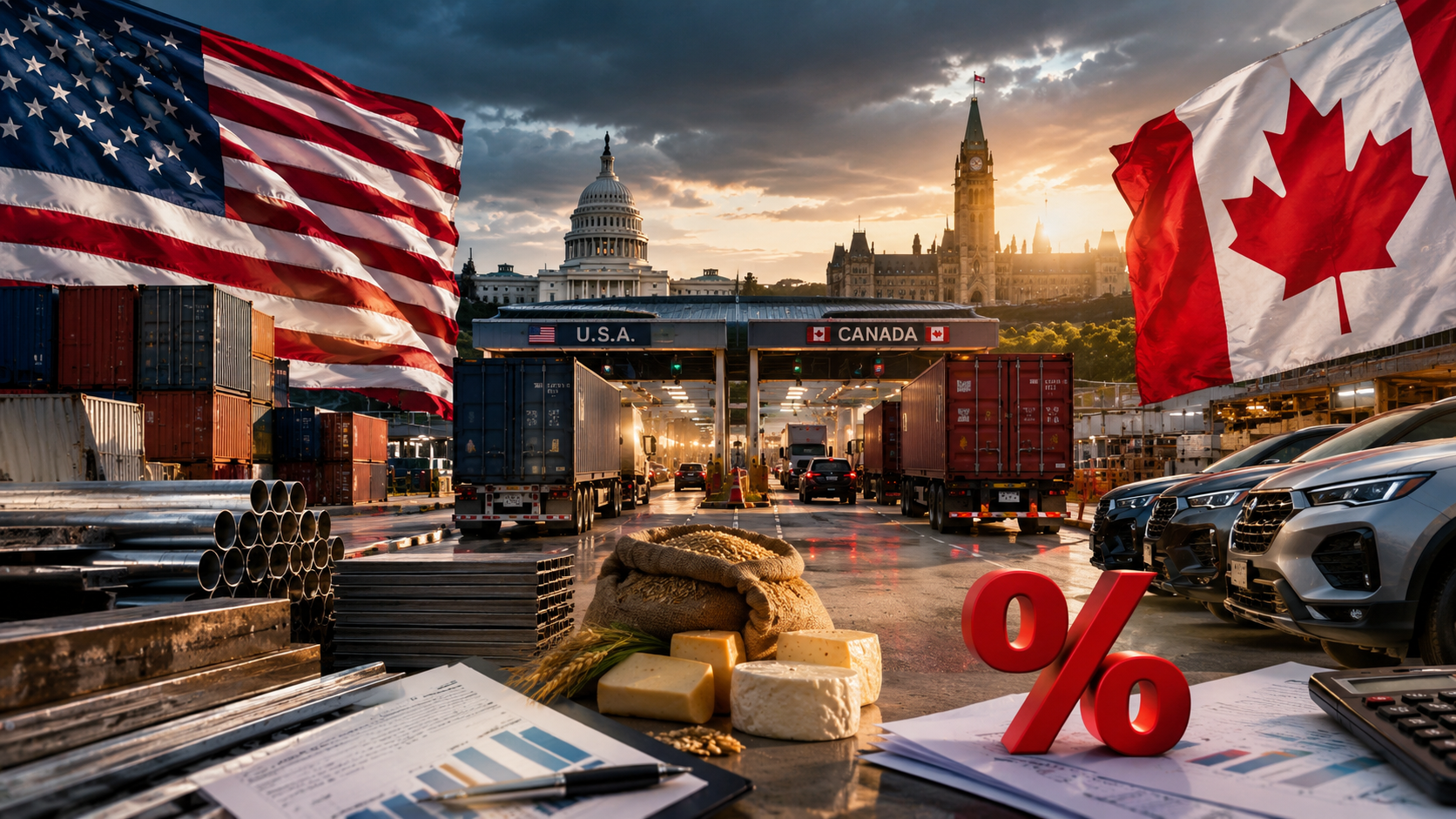
The trade relationship between the United States and Canada has entered another tense phase after President Donald Trump imposed new 50% tariffs on a range of Canadian goods. At first glance, the decision may sound simple: the United States is putting a heavy tax on products imported from Canada. However, the real story is much bigger. The dispute involves dairy, alcohol, automobiles, trade restrictions, retaliation, and the future of the USMCA trade relationship.
Moreover, Canada’s response shows that Ottawa is not willing to simply accept the pressure without taking action. So, why is Trump imposing a 50% tariff on Canada, what products are affected, and how has Canada replied? Here is what you need to know.
A tariff is essentially a tax placed on imported goods. Therefore, when the United States imposes a 50% tariff on selected Canadian products, those goods can become significantly more expensive for importers bringing them into the American market. Trump’s administration used Section 338 of the Tariff Act of 1930 to justify the action. The White House argued that Canada had treated certain American products unfairly and had created disadvantages for U.S. commerce.
The new measures target selected Canadian goods rather than every product imported from Canada. The dispute has focused particularly on areas such as:
The White House has argued that the tariffs are designed to respond to what it describes as discriminatory or unequal treatment of American exports. In simple words, the Trump administration’s position is:
If Canada makes it harder for certain American products to enter or compete in Canada, the United States can respond by making selected Canadian products more expensive to import into America.
However, Canada strongly disputes the American interpretation of the situation.
The main reason given by the Trump administration is Canada’s alleged discriminatory treatment of American products. The dispute is not based on only one issue. Instead, several trade disagreements have been brought together.
One major source of tension involves American alcoholic beverages. The U.S. administration has complained that some Canadian provincial actions restricted the sale and distribution of American alcohol while products from other countries did not face the same treatment.
Trump’s administration argues that this puts American producers at an unfair disadvantage.
As a result, alcohol became one of the areas used to justify the additional tariffs on Canadian goods. However, this issue did not develop in isolation. It became part of a wider trade conflict between the two countries.
In other words, alcohol became one symbol of a much larger battle over market access and retaliation.
Dairy has also become a major point of disagreement. The United States has long raised concerns about access to Canada’s protected dairy market. The Trump administration argued that Canadian policies made it more difficult for American dairy producers to compete fairly.
The White House said the tariff action was intended to address disadvantages faced by U.S. dairy products.
For Trump, this fits into a broader approach to trade policy. The administration has repeatedly emphasized the idea of reciprocal and fair trade. The basic argument is that if another country places barriers on American businesses, Washington should be prepared to respond with its own restrictions. Therefore, the Canada dispute is also part of Trump’s wider belief that the United States should use tariffs as leverage during trade negotiations.
The automobile sector is another important part of the dispute. The Trump administration has criticized Canadian policies affecting American vehicle exports and has argued that some restrictions create an unfair disadvantage for U.S. producers.
Cars and auto-related trade matter enormously because the United States and Canada have deeply connected supply chains.
A vehicle can cross the U.S.-Canada border multiple times during the manufacturing process before it is finally sold. Consequently, tariffs and trade restrictions can affect much more than one company or one country.
They can influence:
That is why the automobile issue has added serious economic pressure to the trade dispute.
A 50% tariff is extremely high.
For example, imagine an importer purchases a Canadian product worth $100. A 50% tariff could add another $50 in tariff costs before other expenses are considered. Of course, the final impact depends on the product, existing duties, supply contracts, exemptions, and other factors.
Nevertheless, the main point is clear:
A 50% tariff can make affected imports much less competitive in the American market.
The cost might be absorbed partly by:
Therefore, tariffs are not always paid by only one side in a simple way. Businesses often pass at least some additional costs through the supply chain. As a result, a trade war can eventually affect ordinary people through higher prices, reduced product choices, or pressure on jobs.
The new U.S. action covers a selected range of Canadian products, not all Canadian exports. Products discussed in connection with the tariff measures include categories involving:
However, some major categories have exemptions or are treated under separate tariff arrangements.
For example, the White House said the Section 338 measures do not apply to certain categories including energy, potash, some products already covered by Section 232 tariffs, fish, critical minerals, and certain other goods. This distinction is important.
Headlines saying “Trump imposes 50% tariffs on Canada” do not mean that every Canadian product entering the United States automatically faces the same new 50% duty. The actual list depends on the specific tariff proclamations and covered product categories.
The situation changed several times because the United States and Canada were negotiating. Initially, the Trump administration announced the new 50% measures and set an effective date. Later, the implementation was temporarily postponed while both countries attempted to make progress toward an agreement. However, the negotiations ultimately failed to produce a final deal before the deadline.
The United States then moved forward with the tariffs on selected Canadian goods. This rapid sequence of announcements, delays, negotiations, and implementation created uncertainty for businesses on both sides of the border. For companies planning imports, exports, production, and investment, uncertainty itself can be expensive. After all, it is difficult for a business to make long-term decisions when the cost of crossing a border can suddenly change.
Canada’s response was clear: Ottawa rejected the idea that it should simply accept the new U.S. measures without a response. Prime Minister Mark Carney’s government had previously said that Canada was prepared to defend its workers, farmers, businesses, and families while continuing to seek a solution through negotiations. After the latest trade talks failed, Canada announced retaliatory action. Canada said it would impose matching or dollar-for-dollar retaliatory tariffs on selected U.S. goods.
The Canadian response is important because it turns a one-sided tariff decision into a wider trade confrontation. In other words, the United States raises tariffs on selected Canadian products, and Canada responds by raising tariffs on selected American products. This is the classic pattern of a tariff escalation.
Canada’s argument is based on several concerns. First, Canadian officials have argued that the United States is taking unilateral trade actions that undermine the stability of the existing trade relationship.
Second, Canada has said it has already tried to negotiate and has made proposals aimed at resolving outstanding issues. Third, Ottawa believes that it has the right to protect its economy when Canadian workers and businesses are targeted by new U.S. trade restrictions. Canada’s message is essentially that cooperation is still possible, but economic pressure will not go unanswered.
This creates a difficult balance. Canada wants to maintain one of the world’s most important trading relationships. At the same time, it does not want to appear as though it will accept every new tariff demand without defending Canadian interests. Therefore, retaliation also has a political purpose. It sends a message to Washington that tariffs against Canada can create consequences for American exporters as well.
Canada’s retaliatory measures are expected to focus on selected American sectors rather than every U.S. product. Areas mentioned in the latest trade dispute include goods connected to sectors such as:
The exact products and timing can depend on Canada’s official retaliation plan. The goal of retaliatory tariffs is usually not simply to collect more tax revenue. Instead, governments often target politically or economically important sectors to increase pressure on the other side during negotiations.
For example, if American exporters lose access to part of the Canadian market, those businesses may pressure U.S. policymakers to seek a deal. Consequently, tariffs can become a form of economic leverage.
How Tariffs Affect Consumer Prices: The Hidden Cost Behind Rising Prices
The latest dispute is best understood as another major escalation in an already tense trade relationship. The United States and Canada remain deeply connected economically. They trade huge volumes of goods, share manufacturing supply chains, and have close business relationships.
However, the relationship has faced repeated pressure from:
Therefore, the new 50% tariffs did not appear out of nowhere. They are part of a larger argument over how the two countries should trade with each other.
This is one of the biggest long-term questions. The United States-Mexico-Canada Agreement, or USMCA, is designed to provide a framework for trade among the three North American countries. Canada has argued that some U.S. tariff actions conflict with the spirit or obligations of the agreement.
Meanwhile, the Trump administration has continued to push for changes that it believes would create better conditions for American workers and businesses. As a result, the dispute raises questions about how stable North American trade rules will be in the future. If businesses cannot rely on predictable trade arrangements, companies may reconsider where they manufacture products or invest money.
For example, a company might decide to:
Therefore, the impact could continue long after the immediate tariff dispute ends.
The answer may be: both sides.
Canadian companies exporting affected products to the United States could face higher costs.
This may lead to:
For smaller exporters, a sudden 50% tariff can be especially difficult because they may have fewer alternative markets.
At the same time, Canadian retaliation could hurt selected U.S. exporters. American companies that sell products into Canada could suddenly face higher costs and reduced competitiveness. Moreover, U.S. companies importing Canadian components could also face increased expenses.
Perhaps most importantly, consumers on both sides could eventually feel the effects. When tariffs increase business costs, companies may raise prices. Of course, not every tariff results in the same price increase. Companies can absorb some costs or change suppliers. Nevertheless, higher trade barriers generally create pressure throughout the supply chain. That means a political fight over tariffs can eventually affect the price of everyday products.
Trump has repeatedly treated tariffs as a powerful negotiating tool. The strategy is based on the idea that access to the huge American market gives the United States significant leverage. Therefore, the administration can use tariffs to push other countries toward changes in:
Supporters of this strategy argue that strong tariffs can force trading partners to negotiate and protect American industries. Critics, however, argue that tariffs can raise costs, create uncertainty, trigger retaliation, and damage long-term economic relationships. The dispute with Canada shows both sides of that debate. Tariffs can create immediate negotiating pressure, but they can also produce an equally strong response.
The next stage depends largely on whether the United States and Canada decide to return to serious negotiations. There are several possible outcomes.
The two countries could reach an agreement that addresses disputes involving dairy, alcohol, automobiles, and other sectors. If that happens, some or all of the new tariffs could potentially be removed or reduced.
Alternatively, both countries could maintain retaliatory measures. This would create more pressure on exporters and could further damage business confidence.
The use of trade laws and the relationship between the new tariffs and existing trade agreements could also lead to legal disputes. Therefore, the conflict may continue through negotiations, retaliation, and legal arguments at the same time.
In Last Trump’s 50% tariff on selected Canadian goods is about much more than one tax on imports. It is the result of a wider disagreement over whether Canada has treated certain American products unfairly, particularly in areas involving alcohol, dairy, and automobiles.
The Trump administration argues that the tariffs are necessary to defend American businesses and create more balanced trade. Canada strongly disagrees and says it is prepared to protect its own workers, farmers, businesses, and families.
Canada’s answer has been to pursue negotiations while also preparing retaliatory, dollar-for-dollar tariffs on selected U.S. goods. Therefore, this is not simply a dispute between two governments. It could affect:
Businesses. Workers. Farmers. Manufacturers. Supply chains. And ultimately, consumers in both countries.
For now, one thing is clear: the U.S.-Canada trade relationship remains under serious pressure, and the fight over tariffs could shape the future of North American trade.
Trump’s administration said the tariffs were a response to what it considers discriminatory or unequal Canadian treatment of American commerce, particularly involving areas such as alcohol, dairy, and motor vehicles.
No. The measures apply to selected Canadian products. Some categories have exemptions or are covered under different tariff arrangements.
Canada rejected the U.S. action and announced plans for retaliatory, dollar-for-dollar tariffs on selected American goods, while also saying it remains prepared to negotiate.
The United States has long criticized restrictions affecting access to Canada’s dairy market. Canada, meanwhile, has defended its trade policies and market protections.
Yes, potentially. Tariffs can increase costs for importers and businesses, and some of those costs may eventually be passed to consumers.
Yes. Negotiations remain the most likely way to reduce tensions. However, a final agreement would require both sides to resolve major disagreements over market access and trade rules.




One thought on “Latest: Why Trump Is Imposing a 50% Tariff on Canada and Canada’s Reply”