

 11
11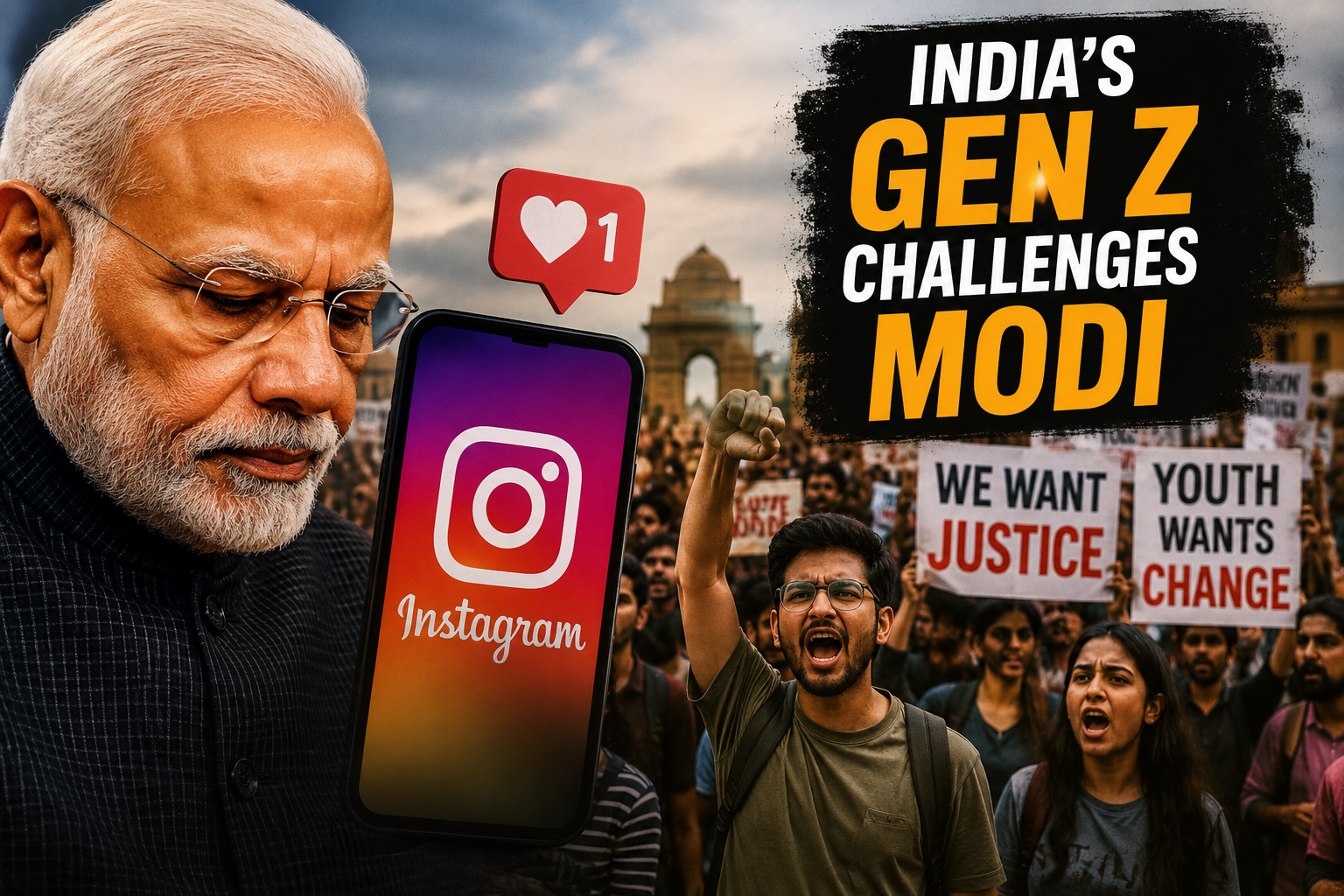
A youth movement that began with frustration over an exam scandal has grown into one of the biggest political challenges Prime Minister Narendra Modi has faced in years—and its impact could reshape India’s political future.
What started as online outrage has rapidly transformed into a nationwide movement powered by millions of young Indians using Instagram, memes, videos, and digital campaigns to demand accountability. The momentum has become impossible to ignore, raising new questions about how social media is changing politics in the world’s largest democracy.
For more than a decade, Narendra Modi has maintained a strong political image backed by electoral victories and a powerful online presence. However, the recent wave of Gen Z activism suggests that India’s younger generation is becoming increasingly willing to challenge authority when issues directly affect their future.
The protests were sparked by allegations surrounding a leaked national medical entrance examination, leaving thousands of students frustrated over fairness in one of India’s most competitive education systems. The controversy quickly evolved into a broader debate about youth unemployment, educational reforms, and career opportunities.
At the center of the movement is the youth-led Cockroach Janta Party (CJP), a non-political social movement that rapidly attracted around 22 million Instagram followers, becoming one of the fastest-growing online communities in the country. Its supporters used creative videos, music, memes, graffiti, and social media campaigns to amplify their message and reach millions of young voters.
Despite Prime Minister Modi releasing a rare Instagram video expressing concern for students and promising corrective measures, protesters continued their demonstrations across multiple cities. Many participants argued that symbolic gestures were no longer enough and demanded concrete government action.
The movement achieved a significant milestone when Education Minister Dharmendra Pradhan resigned, fulfilling the protesters’ primary demand. Political analysts describe the resignation as an uncommon concession from a government that has traditionally projected an image of strength and stability.
Experts believe the protests reveal a deeper shift in India’s political landscape. While previous elections were often influenced by caste, religion, and regional identities, many Gen Z voters now appear to prioritize issues such as employment, education quality, transparency, and government accountability.
India’s economy continues to post strong growth figures, yet concerns over graduate unemployment and the impact of artificial intelligence on future jobs have become increasingly important for young people entering the workforce. These concerns have fueled broader dissatisfaction beyond the exam controversy itself.
The ruling Bharatiya Janata Party (BJP) still enjoys significant national support, and political observers caution against interpreting the protests as an immediate electoral shift. However, analysts say the movement demonstrates that digitally connected young voters can now organize rapidly, influence public debate, and pressure governments in ways that were far more difficult just a few years ago.
With key state elections approaching, political parties across India are expected to pay closer attention to Gen Z voters, whose online influence is increasingly translating into real-world political pressure.
Whether this movement becomes a lasting political force or remains a powerful moment of youth activism, it has already shown that social media platforms like Instagram are becoming central battlegrounds in India’s evolving democracy. As millions of first-time and young voters prepare for future elections, their voices could play a far greater role in shaping the country’s political direction than ever before