
 11
11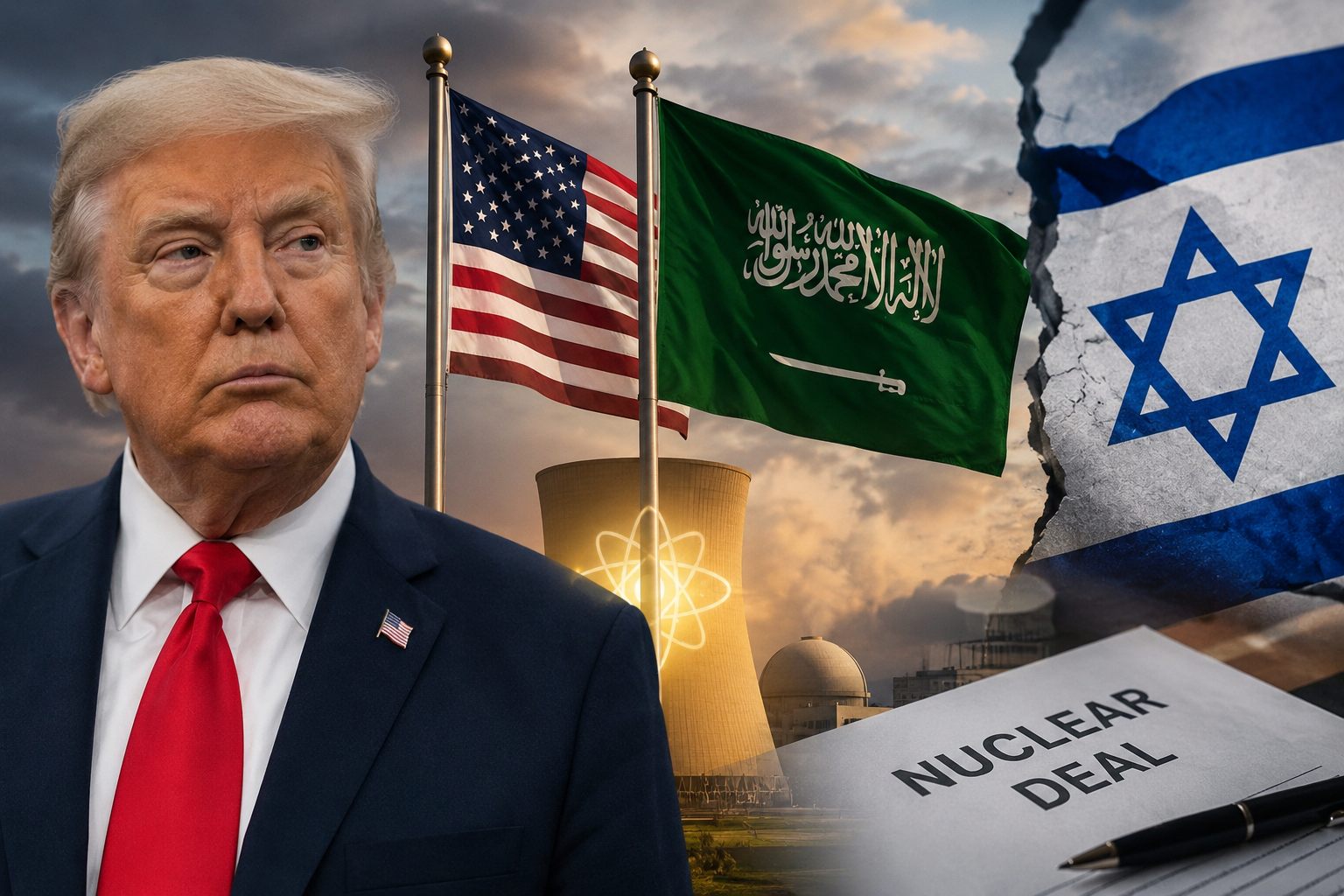
A major U.S.-Saudi agreement is suddenly facing a high-stakes political condition—and it could reshape the future of Middle East diplomacy. What seemed like a breakthrough in civilian nuclear cooperation has now become deeply connected to one of the region’s most sensitive geopolitical issues.
Former U.S. President Donald Trump announced that the newly signed civilian nuclear cooperation agreement with Saudi Arabia will only move forward if the kingdom officially joins the Abraham Accords by normalizing diplomatic relations with Israel. The unexpected condition has reignited debate over the future of U.S.-Saudi ties and the broader peace process in the Middle East.
Trump said the United States is prepared to support Saudi Arabia’s peaceful nuclear energy ambitions, but approval of the agreement depends entirely on Riyadh recognizing Israel through the Abraham Accords.
He also emphasized that the proposed cooperation is limited to civilian, non-enriched nuclear energy and does not permit uranium enrichment for military purposes.
The announcement comes after the U.S. and Saudi Arabia reached a framework for civilian nuclear cooperation. However, Trump’s latest statement effectively places the agreement on hold unless Saudi Arabia changes its long-standing position on relations with Israel.
Saudi Arabia has repeatedly stated that it is unwilling to normalize ties with Israel without meaningful progress toward establishing a Palestinian state. That position has remained unchanged throughout the ongoing regional tensions.
By linking the nuclear agreement to the Abraham Accords, Washington is combining two separate strategic goals:
Supporters argue that the approach could strengthen regional security and deepen cooperation among U.S. allies. Critics, however, believe it may complicate negotiations by attaching political conditions to an important energy agreement.
The announcement is expected to draw close attention from governments across the Middle East.
Israel has consistently supported expanding the Abraham Accords, while Saudi Arabia continues to insist that Palestinian statehood remains central to any normalization process. This difference could make future negotiations significantly more challenging.
Whether the nuclear cooperation agreement ultimately takes effect will largely depend on diplomatic progress between Saudi Arabia and Israel.
If no normalization agreement is reached, the landmark nuclear deal could remain stalled despite both countries expressing interest in expanding energy cooperation. The coming months are likely to determine whether diplomacy can bridge one of the region’s most complex political divides.
Trump’s decision has transformed what appeared to be a straightforward civilian nuclear partnership into a broader diplomatic test for the Middle East. As negotiations continue, the outcome could influence regional alliances, U.S. foreign policy, and the future of Arab-Israeli relations for years to come.