

 11
11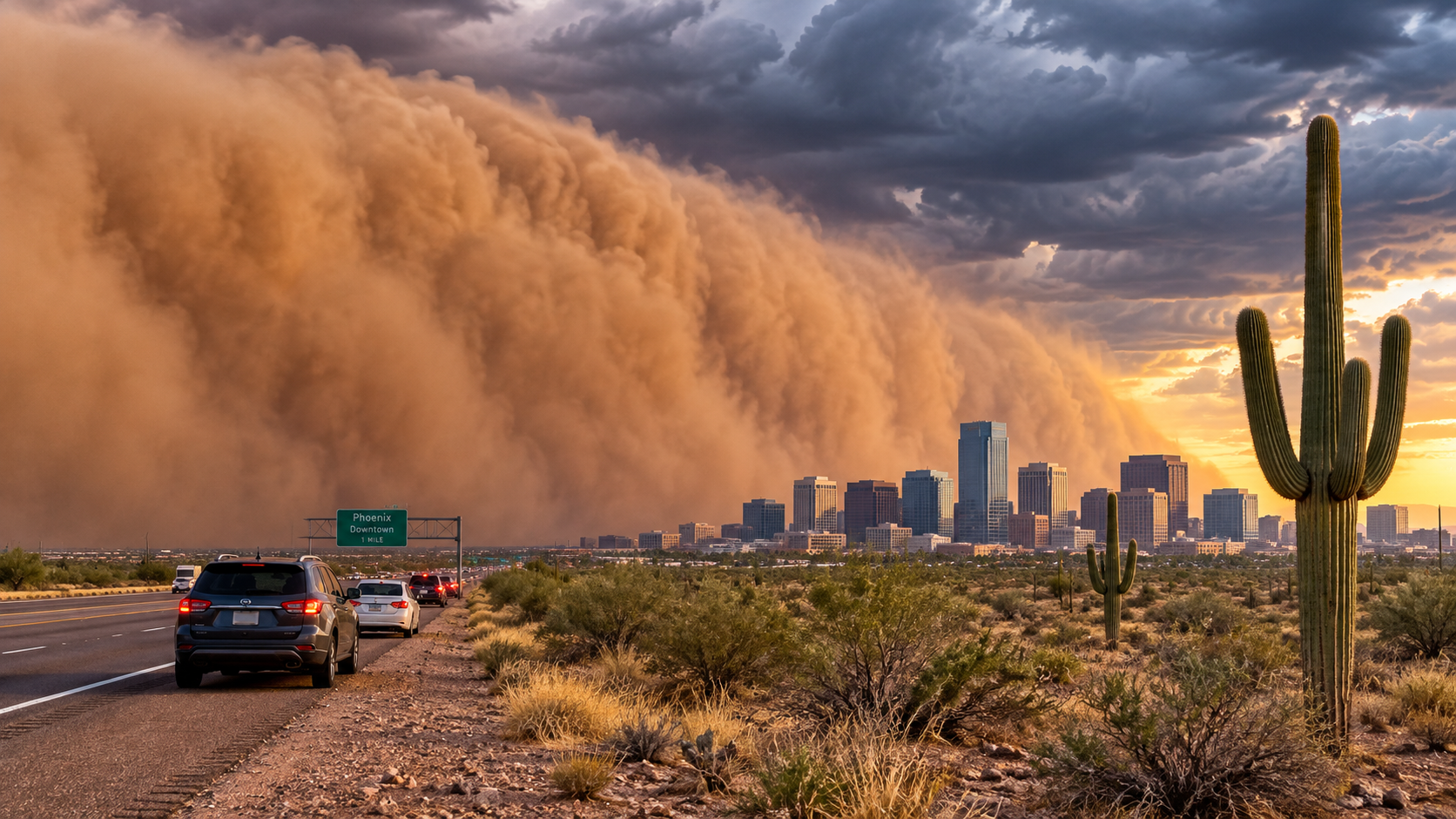
If you’ve ever watched a towering wall of dust sweep across the Arizona desert, you’ve likely witnessed a haboob. These dramatic dust storms are among the most recognizable weather events in the American Southwest, especially around Phoenix and central Arizona. While they can look breathtaking from a distance, haboobs are far more than a spectacular sight—they can create dangerous driving conditions, reduce air quality, and pose serious health risks.
Whether you’re an Arizona resident, planning a visit, or simply curious about these fascinating storms, understanding what a haboob is can help you stay safe and appreciate the unique weather patterns that shape desert life.
This complete Arizona guide explains how haboobs form, why they happen so often, when they are most common, and what you should do if you’re caught in one.
A haboob is an intense dust storm created by the strong winds flowing outward from a thunderstorm. As these powerful winds race across dry desert land, they lift huge amounts of dust, sand, and fine soil particles into the air, creating a massive wall of dust that can stretch for miles.
The word “haboob” comes from the Arabic word habb, meaning “to blow” or “strong wind.” Although the term originated in North Africa and the Middle East, it has become widely used in Arizona because the region experiences similar weather conditions.
Unlike ordinary windy days, a haboob develops suddenly and can reduce visibility from several miles to nearly zero within minutes.
Arizona’s desert environment creates ideal conditions for dust storms.
Several factors work together:
When these conditions combine, large amounts of dust become airborne almost instantly.
Central Arizona, including Phoenix, frequently experiences haboobs because the surrounding desert provides abundant loose soil that can easily be lifted by high winds.
Understanding the process makes these storms much less mysterious.
During Arizona’s monsoon season, warm air rises rapidly, forming powerful thunderstorms.
Rain falling through dry desert air cools rapidly, making the air heavier.
The cooled air rushes toward the ground.
After reaching the ground, the air spreads across the desert at high speed.
The strong winds sweep across dry land, lifting dust thousands of feet into the atmosphere.
The result is the enormous wall of dust known as a haboob, moving across highways, neighborhoods, and open desert landscapes.
Most haboobs occur during Arizona’s summer monsoon season, which generally runs from mid-June through late September.
The highest activity usually occurs during:
| Month | Dust Storm Risk |
|---|---|
| June | Moderate |
| July | Very High |
| August | Very High |
| September | Moderate |
| October–May | Low |
Afternoon and evening thunderstorms are the most common triggers.
Although dust storms can develop across many desert regions, some Arizona locations experience them more frequently than others.
These include:
Open desert areas surrounding these cities often provide the loose soil needed for dust storm formation.
One of the reasons haboobs attract so much attention is their dramatic appearance.
From a distance, they often resemble:
Some dust walls can exceed 5,000 feet (1,500 meters) in height and stretch over 50 to 100 miles across the desert.
As the storm approaches, daylight may suddenly turn orange or brown, making visibility disappear in seconds.
Despite their beauty, haboobs are considered serious weather hazards.
Major risks include:
Visibility may drop to less than a few feet, making driving extremely dangerous.
Multi-vehicle highway collisions have occurred when drivers continued moving into dense dust.
Dust particles remain suspended long after the storm passes, affecting air quality.
Strong winds can send tree branches, signs, and outdoor furniture airborne.
People with asthma, allergies, or lung disease may experience worsening symptoms.
Dust storms carry millions of tiny particles.
These particles may include:
Possible health effects include:
Children, older adults, pregnant women, and individuals with chronic lung conditions should take extra precautions during dust storms.
Driving is one of the greatest dangers during a dust storm.
If you’re caught on the road:
Many crashes occur because other drivers mistake parked vehicles with illuminated brake lights for moving traffic.
If you’re indoors during a haboob:
After the storm, clean surfaces carefully to avoid stirring fine dust back into the air.
Arizona attracts hikers, cyclists, campers, and photographers year-round.
If you’re outdoors:
Never try to outrun a fast-moving dust storm on foot.
Fortunately, most haboobs move relatively quickly.
Typical duration:
| Storm Stage | Average Time |
|---|---|
| Initial arrival | 5–15 minutes |
| Peak dust | 15–30 minutes |
| Lingering dust | 30 minutes to several hours |
Air quality may remain poor even after visibility returns.
Although the terms are often used interchangeably, they are not exactly the same.
| Haboob | Sandstorm |
|---|---|
| Caused by thunderstorm outflow | Usually caused by strong winds |
| Common during monsoon season | Can occur anytime |
| Creates a towering dust wall | Often lower to the ground |
| Frequently seen in Arizona | Found worldwide |
| Usually short-lived | Duration varies widely |
Every haboob is a type of dust storm, but not every dust storm qualifies as a haboob.
Yes.
Large dust storms can create:
Pilots and air traffic controllers closely monitor weather conditions during Arizona’s monsoon season to maintain safety.
Most haboobs are more disruptive than destructive, but stronger storms may cause:
Regular home maintenance can reduce the impact of repeated dust storms.
Scientists continue studying long-term trends.
Several factors may influence future dust storm activity:
While individual storms cannot be linked to a single cause, dry landscapes and changing weather patterns may increase conditions favorable for dust generation in some areas.
Although they can be hazardous, haboobs are a natural part of Arizona’s desert ecosystem.
They:
For many longtime Arizonans, seeing a towering wall of dust rolling across the desert has become one of the defining images of summer.
Preparation makes a significant difference.
Consider keeping these essentials ready:
Following local weather alerts during monsoon season also helps you react quickly when storms develop.
A haboob is a specific type of dust storm caused by powerful thunderstorm outflow winds. Regular dust storms can develop from other strong wind events.
No. Other Arizona communities and desert regions around the world also experience haboobs, but Phoenix is one of the most well-known locations.
Yes. Reduced visibility, poor air quality, flying debris, and hazardous driving conditions make haboobs potentially dangerous.
Many haboobs travel at speeds between 30 and 60 mph (48–97 km/h), though speeds vary depending on the storm.
People with asthma, allergies, or respiratory conditions may benefit from wearing a well-fitting mask when exposure to blowing dust cannot be avoided.
No. If visibility becomes poor, pull completely off the roadway, stop safely, turn off your lights, and wait until conditions improve.
Yes. Arizona experiences haboobs during many monsoon seasons, although the number and intensity vary from year to year.
A haboob is one of Arizona’s most remarkable natural weather events. Formed by powerful thunderstorm outflow winds, these massive dust storms can transform clear desert skies into towering walls of dust within minutes. While they are an impressive reminder of nature’s power, they also present serious risks to drivers, travelers, and anyone with respiratory conditions.
Understanding what a haboob is, how it forms, and how to respond safely allows residents and visitors alike to navigate Arizona’s monsoon season with greater confidence. By staying informed, monitoring weather forecasts, and following basic safety precautions, you can reduce risks while appreciating one of the Southwest’s most iconic natural phenomena.