
 11
11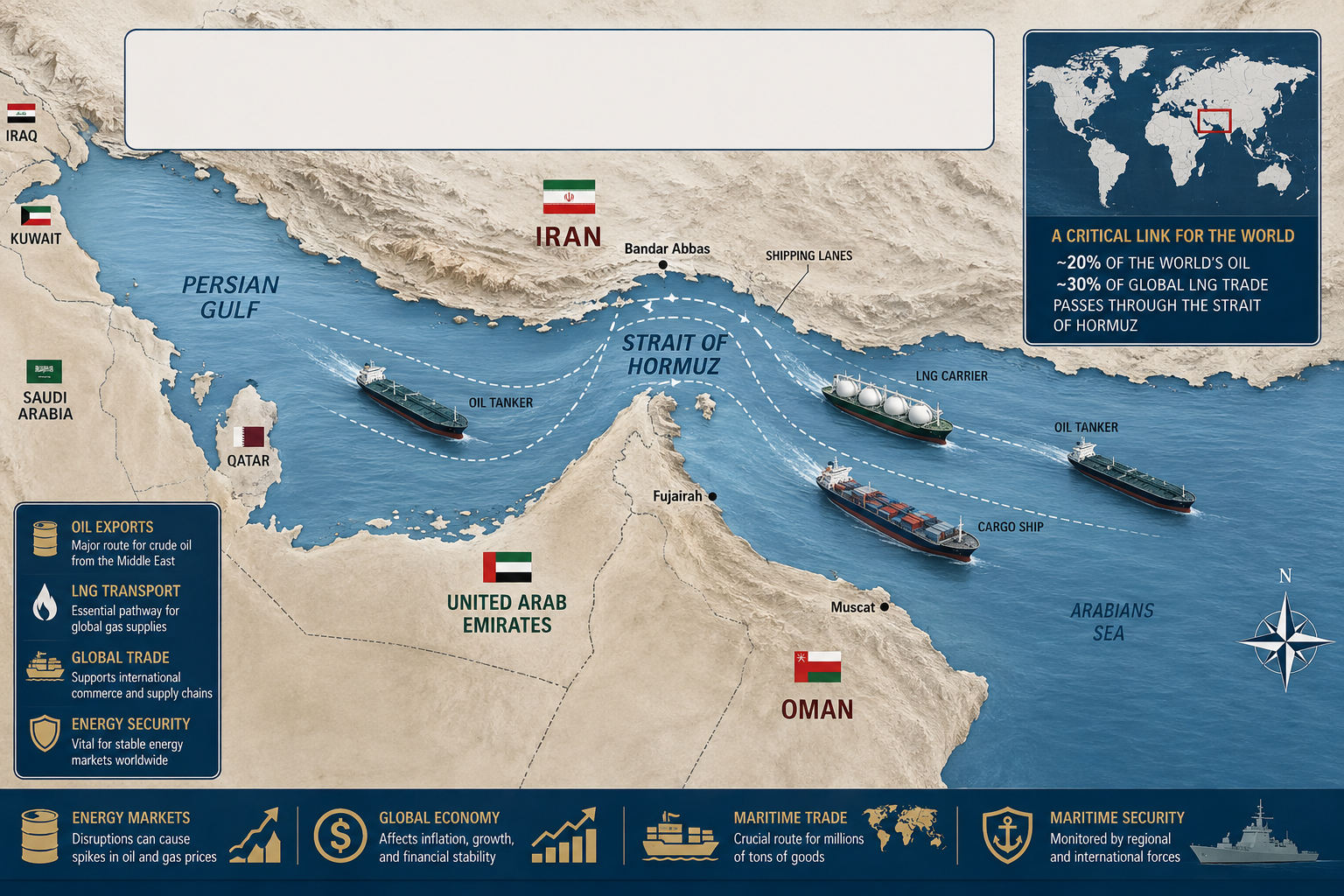
The Strait of Hormuz is one of the most strategically significant waterways in the world. Although it is only a narrow stretch of water connecting the Persian Gulf to the Gulf of Oman and the Arabian Sea, its influence extends far beyond the Middle East. Every day, massive oil tankers, liquefied natural gas (LNG) carriers, and commercial vessels pass through this maritime choke point, carrying energy supplies that power economies across Asia, Europe, and beyond.
Whenever tensions rise in the region, the Strait of Hormuz quickly becomes the focus of global attention. Governments, investors, shipping companies, and financial markets closely monitor developments because even a temporary disruption could have far-reaching consequences for oil prices, global trade, inflation, and economic stability.
This article explains why the Strait of Hormuz is important, where it is located, how it supports the global economy, why it is often at the center of geopolitical tensions, and what could happen if shipping through the strait is disrupted.
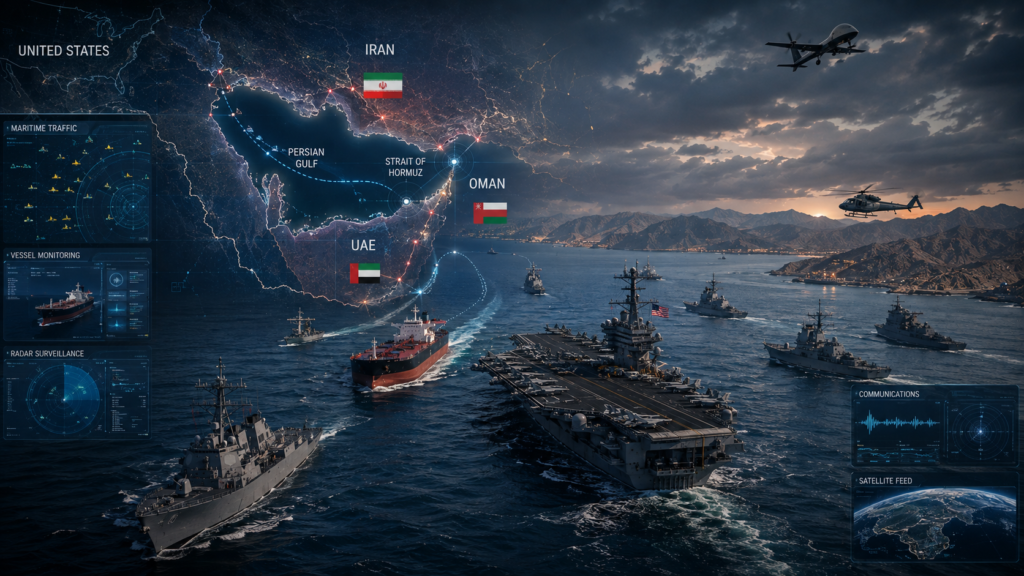
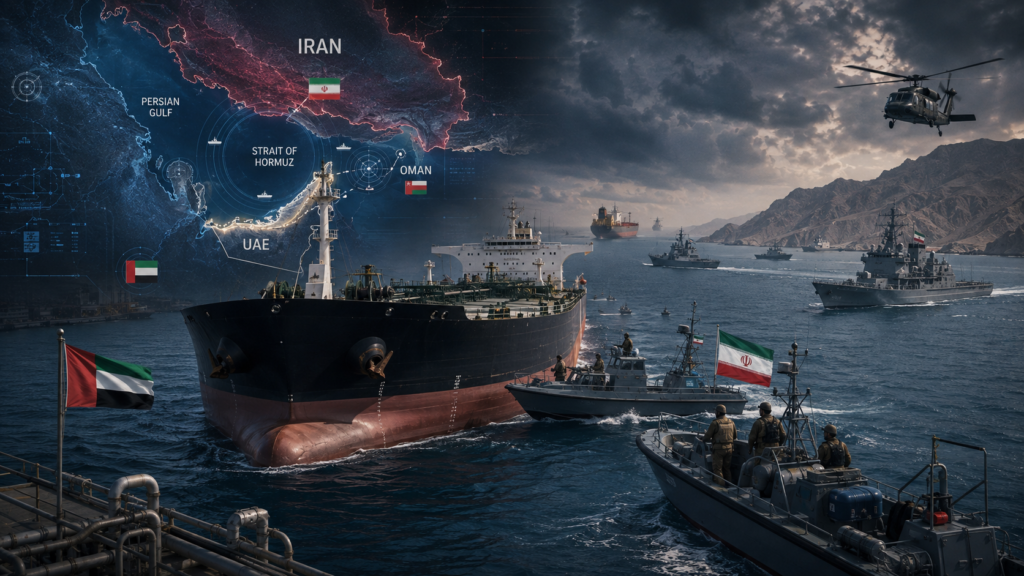
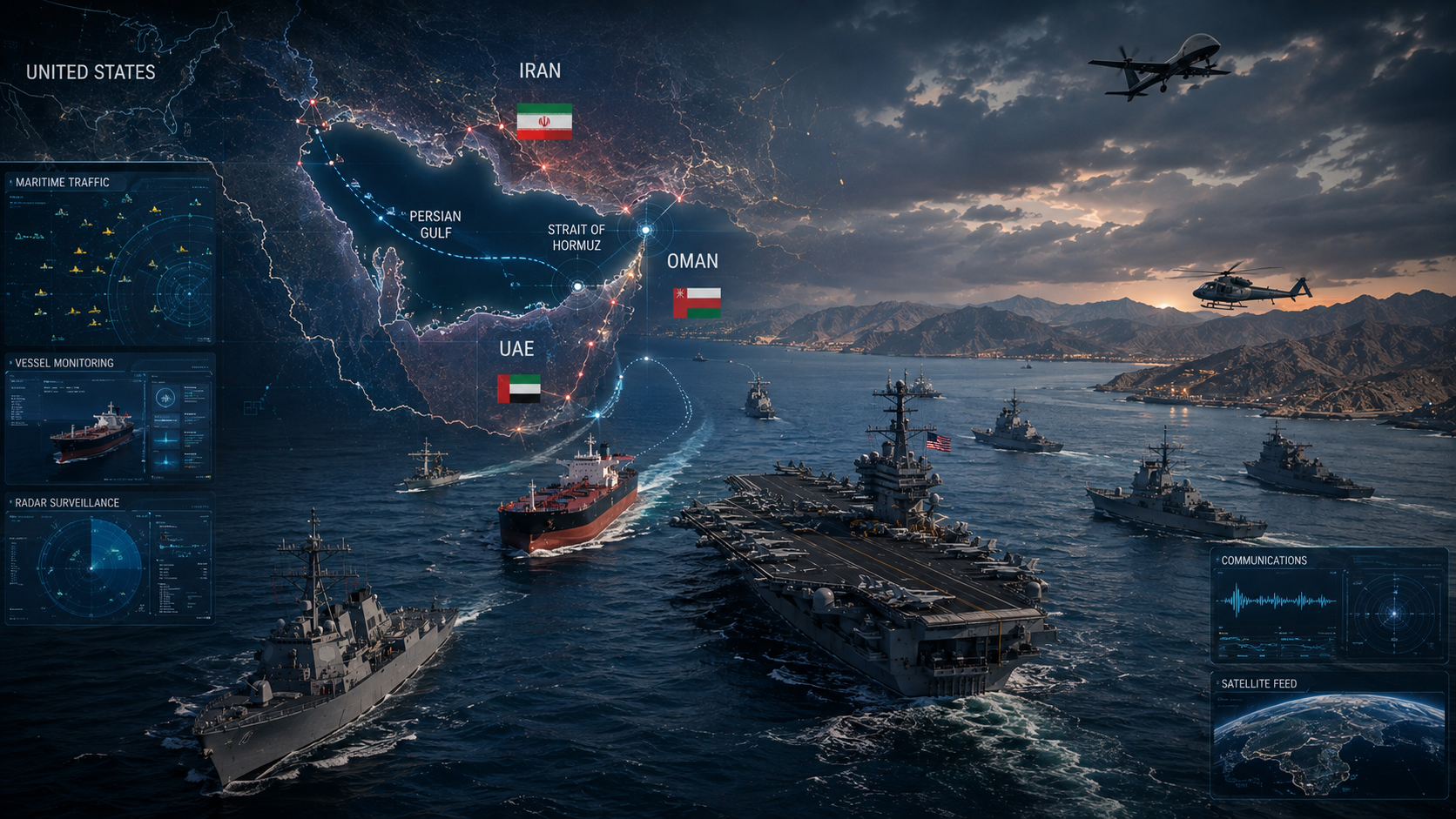
The Strait of Hormuz is a narrow sea passage located between Iran to the north and Oman and the United Arab Emirates (UAE) to the south.
It serves as the only maritime gateway connecting the Persian Gulf with the open ocean through the Gulf of Oman.
Countries whose exports rely heavily on this route include:
Without this passage, many Gulf countries would struggle to transport large volumes of crude oil and natural gas to international markets.
Geographically, the Strait of Hormuz sits at one of the world’s most critical crossroads.
It links:
Because nearly all Gulf shipping must pass through this narrow channel, it has become one of the world’s most important maritime choke points.
The importance of the Strait of Hormuz comes from its role as a global energy transportation route.
Every day, millions of barrels of crude oil and large quantities of liquefied natural gas (LNG) move through the strait toward major importing nations.
Many of the world’s largest economies depend on these energy supplies.
Its significance can be summarized in several key areas.
The Strait of Hormuz is widely recognized as one of the busiest energy shipping routes on Earth.
Oil exported through the strait reaches countries including:
Because global industries, transportation systems, and electricity generation depend heavily on these supplies, uninterrupted shipping is essential.
Energy markets react almost immediately to developments affecting the Strait of Hormuz.
Even rumors of disruption can influence:
Investors closely follow geopolitical developments because uncertainty often creates market volatility.
Although energy exports receive the most attention, the strait also supports broader international trade.
Commercial ships transporting:
also rely on safe navigation through regional waters.
When oil becomes more expensive, transportation and manufacturing costs often increase.
Higher energy prices may contribute to:
For this reason, economists frequently monitor developments in the region.
The Strait of Hormuz regularly appears in international headlines because of its strategic location.
Periods of heightened regional tension have included:
Because of its importance, developments in the area often attract worldwide attention.
The following table highlights why the strait matters to different nations.
| Country | Importance of the Strait |
|---|---|
| Saudi Arabia | Major crude oil exports |
| Iraq | Primary export route for oil |
| Kuwait | Essential energy shipments |
| Qatar | Significant LNG exports |
| United Arab Emirates | Oil and commercial trade |
| Iran | Energy exports and strategic influence |
| India | Major energy importer |
| China | Critical source of imported oil |
| Japan | Heavy dependence on imported energy |
| South Korea | Reliable energy supply for industry |
Financial markets respond quickly to geopolitical uncertainty.
Concerns over supply disruptions often lead to higher crude oil prices.
Gold is commonly viewed as a safe-haven asset during periods of uncertainty.
Energy, transportation, airline, and shipping sectors may experience increased volatility.
Major geopolitical events sometimes influence exchange rates as investors seek stability.
Although complete closures are considered unlikely due to the significant economic consequences for many countries, even partial disruptions could have global effects.
Possible consequences include:
The duration and severity of any disruption would determine the overall economic impact.
Unlike many shipping routes, there are limited alternatives capable of handling the same volume of energy exports.
Some pipelines bypass portions of the Persian Gulf, but they cannot fully replace maritime transportation through the strait.
This makes uninterrupted navigation particularly important.
The Strait of Hormuz is not only an economic asset but also a strategic location.
Its significance includes:
Many countries maintain a close interest in ensuring freedom of navigation through international waters.
Large-scale shipping also creates environmental responsibilities.
Potential risks include:
Governments and maritime organizations work to improve safety standards and reduce environmental risks.
Many people assume geopolitical events only affect governments, but changes in the Strait of Hormuz can have practical consequences for households.
Possible impacts include:
These indirect effects demonstrate why events in a relatively small waterway can influence daily life worldwide.
Not true. Many countries across Asia, Europe, and other regions rely on energy transported through the strait.
Most incidents do not completely halt maritime traffic. Shipping often continues with enhanced security measures and careful navigation.
While oil is the primary focus, liquefied natural gas (LNG), commercial goods, and regional trade also depend on the route.
| Fact | Details |
| Location | Between Iran and Oman/UAE |
| Connects | Persian Gulf to Gulf of Oman |
| Importance | Major global energy shipping route |
| Primary Cargo | Crude oil, LNG, commercial goods |
| Global Impact | Energy prices, trade, inflation, markets |
| Strategic Role | Maritime security and regional stability |
The global energy transition is changing how countries produce and consume energy, but fossil fuels continue to play a major role in the world economy.
As long as significant volumes of oil and natural gas are exported from Gulf nations, the Strait of Hormuz will remain one of the world’s most important maritime routes.
Investments in renewable energy, diversified supply chains, and alternative infrastructure may reduce long-term dependence, but they are unlikely to eliminate the strait’s strategic significance in the near future.
It is one of the world’s most important maritime choke points because it enables large volumes of oil, natural gas, and commercial goods to reach global markets.
It lies between Iran and Oman, connecting the Persian Gulf to the Gulf of Oman and the Arabian Sea.
Markets respond to concerns about potential supply disruptions. Even uncertainty can influence global energy prices.
Major Gulf exporters—including Saudi Arabia, Iraq, Kuwait, Qatar, the UAE, and Iran—use the route extensively, while large importers such as China, India, Japan, and South Korea depend on the energy transported through it.
Although temporary disruptions are possible, a prolonged complete closure is generally considered unlikely because of the substantial economic consequences for both regional and global stakeholders.
A maritime choke point is a narrow waterway through which a large amount of international shipping must pass. Because alternatives are limited, these routes are strategically important.
The Strait of Hormuz is far more than a narrow waterway—it is a vital link in the global energy and trade network. Its location between the Persian Gulf and the Gulf of Oman allows millions of barrels of oil, large volumes of natural gas, and countless commercial shipments to reach international markets every day.
Because of its strategic importance, developments in the region can influence oil prices, global inflation, financial markets, and international trade within hours. Understanding why the Strait of Hormuz is important helps explain why governments, businesses, and investors closely monitor events in this critical maritime corridor. As global energy demand and geopolitical dynamics continue to evolve, the Strait of Hormuz is likely to remain one of the world’s most closely watched waterways.